

Last Updated: September 25th, 2026
Reading Time: 7 mins
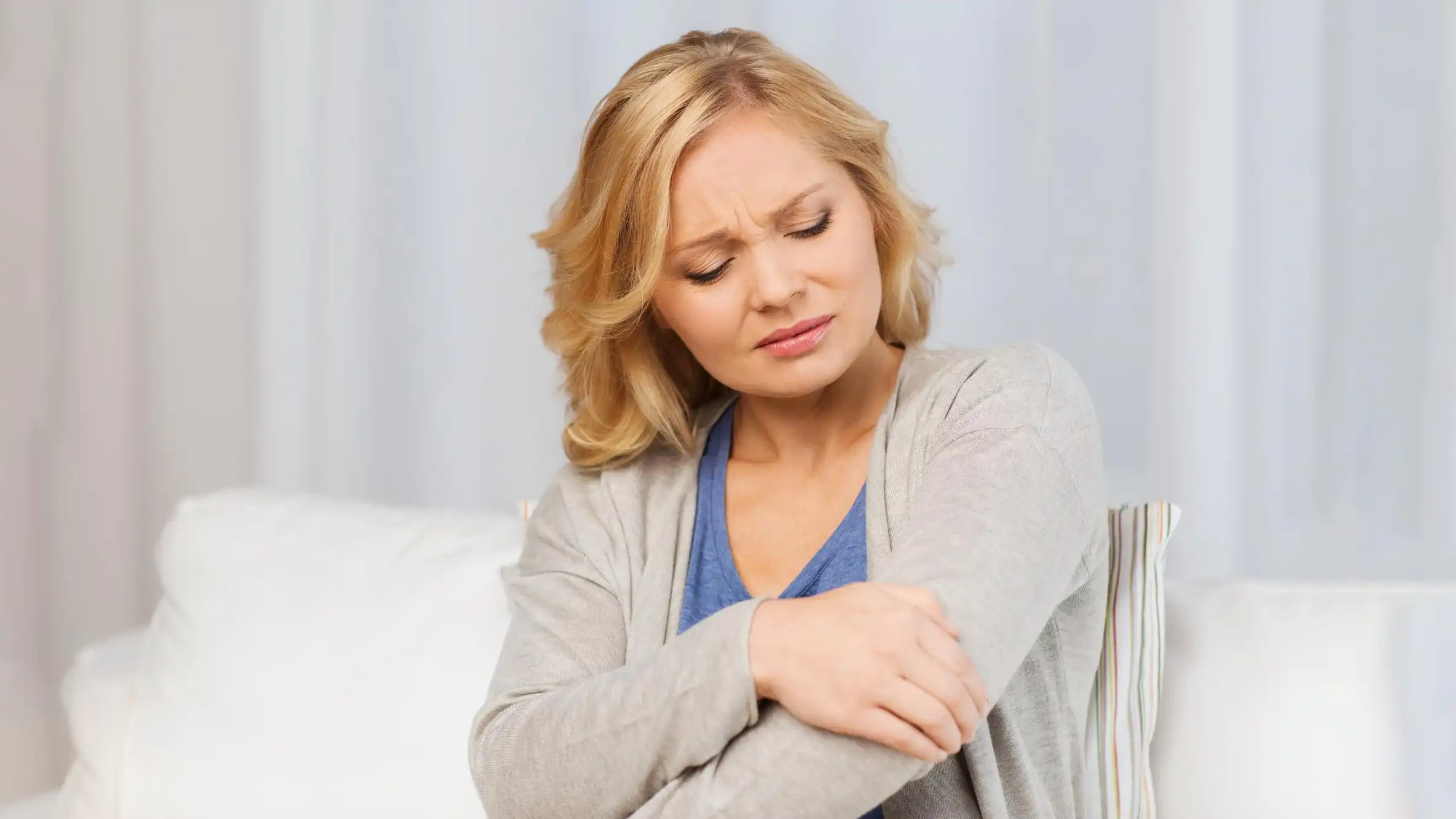
Menopause and joint pain are directly connected, falling oestrogen affects the tissues that keep your joints comfortable, and this pattern is common enough that it has its own clinical name, menopausal arthralgia. If your joints have started aching in ways they never used to, you’re not imagining it, and you’re far from alone.
This guide explains why menopause affects your joints, how to tell an ordinary hormonal ache apart from something that needs a closer look, and what actually helps.
Can menopause cause aching joints in a way that’s medically explainable, not just a vague feeling of getting older? Yes. Oestrogen plays a direct role in maintaining cartilage and collagen, and it has a genuine anti-inflammatory effect throughout your body. As oestrogen levels fall through perimenopause and menopause, that protective effect weakens, inflammation can increase, and your joints lose some of the cushioning and support they relied on. This isn’t a minor symptom either, joint pain affects more than half of women going through this transition.
Menopause and joint muscle pain tend to show up as a package rather than separately, and there’s a straightforward reason for it. The same falling oestrogen that affects your joints also plays a role in muscle tissue and general inflammation levels throughout your body. When both are affected at once, the result can feel like a whole-body ache rather than a single joint acting up, most commonly across the neck, shoulders, elbows, hands, and knees.
Menopause and joint pain usually follow a recognisable, largely harmless pattern, but telling that pattern apart from something else matters, because the two need different responses.
Menopausal arthralgia, the clinical term for hormone-driven joint pain, has a fairly recognisable pattern, and it looks quite different from osteoarthritis when the two are set side by side:
| Menopausal Arthralgia | Osteoarthritis | |
| Joints affected | Several at once | Usually one or two specific joints (knees, hips, spine, fingers) |
| Pattern | Comes and goes | Persistent, gradually progressive |
| Effect of movement | Improves with movement | Worsens with activity |
| Morning stiffness | Variable, not the defining feature | Often present, but usually eases within about 30 minutes, then worsens again through the day |
| X-ray or scan findings | Normal | Shows joint changes |
Here’s where it gets genuinely more complicated, though, the two aren’t mutually exclusive. Hormonal changes during menopause can actually unmask early osteoarthritis that was already developing quietly, making it more noticeable at exactly the same time your hormones are shifting. Experiencing joint pain during menopause doesn’t automatically mean you have arthritis, but if your pain is staying in one specific joint, worsening steadily with activity, or not settling with movement the way hormonal aches typically do, that’s a reasonable prompt to get it properly assessed rather than assumed to be hormonal.
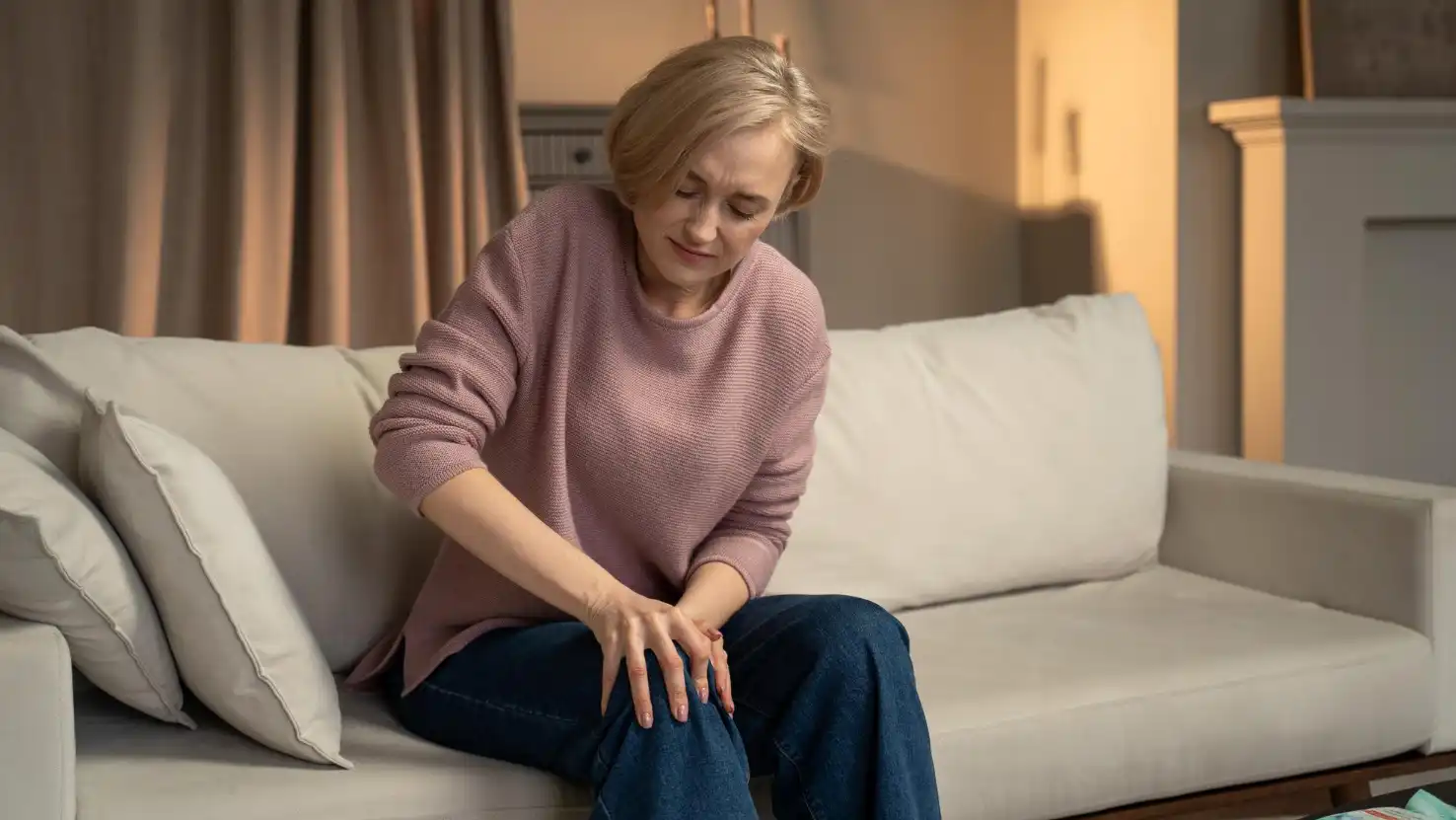
Menopause and joint pain at night can feel considerably worse than during the day, and there’s a real explanation beyond simply noticing it more while lying still. Inflammation levels can shift overnight, and reduced movement while sleeping means joints stiffen without the gentle motion that eases discomfort during the day. Night sweats and disrupted sleep, both already common during menopause, can compound this further, since poor sleep itself tends to make pain feel more intense the next day.
Menopause and joint pain feet-related changes are easy to overlook, since feet aren’t usually the first place people expect hormonal joint changes to show up. The small joints throughout your feet are affected by the same collagen and inflammation changes as anywhere else, and because your feet carry your full weight all day, even a modest amount of extra stiffness or inflammation there can feel disproportionately uncomfortable.
Menopause joint pain fatigue is a difficult combination, since each symptom tends to make the other feel worse. Constant low-level joint discomfort is tiring in itself, and menopause-related fatigue, often driven by disrupted sleep and hormonal changes, lowers your tolerance for pain at the same time. Neither symptom exists in isolation for most women experiencing both, which is part of why addressing them together, rather than treating joint pain and fatigue as two separate problems, tends to give better results.
A few approaches make a genuine, evidence-supported difference:
On HRT specifically, it’s fairer to be honest rather than repeat the assumption that it automatically helps. A major 2026 systematic review pooling data across multiple studies found no significant overall effect of HRT on generalised musculoskeletal pain. For osteoarthritis and rheumatoid arthritis specifically, the evidence is inconsistent across studies, with no firm conclusion either way. HRT remains a reasonable option to discuss as part of managing your broader menopause symptoms, but it isn’t a dependable, dedicated treatment for joint pain based on the current evidence, and it’s better to say that plainly than to oversell it.
For persistent joint or tendon discomfort that doesn’t settle with the approaches above, our Longevity & Healthy Ageing Services include regenerative treatments such as PRP and Lipogems, options that go beyond general lifestyle advice for joints and tendons that need more targeted support. Our exercise and fitness plans are also built specifically around protecting joint mobility as you move through this life stage, rather than a generic one-size-fits-all fitness plan.
Collagen for menopause joint pain is a question with an evidence-scoped answer rather than a simple yes or no. Randomised trials show collagen peptides, typically 5 to 10 grams daily taken consistently for 8 to 12 weeks, may modestly reduce joint pain and stiffness, particularly relevant to osteoarthritis-pattern discomfort. There’s also a 2018 trial in postmenopausal women with low bone density showing improved bone mineral density after a year of use. The honest caveats matter too, many of these studies are small, short-term, and some are industry-funded, the benefits shown are modest rather than transformative, and most collagen research hasn’t been conducted specifically in perimenopausal women, so we’re partly inferring from adjacent evidence rather than menopause-specific proof. It’s a reasonable thing to try, with realistic expectations, rather than a guaranteed fix.
Does menopause joint pain go away once your hormones settle, or is it something you’re stuck managing indefinitely? For many women, symptoms do ease as hormone levels stabilise after menopause, but not always completely. Joint pain is one of the symptoms that can genuinely continue into the years after menopause for some women, which is exactly why addressing the underlying contributors, movement, muscle support, and where appropriate, further investigation, matters more than simply waiting it out.

Dr Raquel Delgado is a private GP in London with more than 20 years of clinical experience in general practice, women’s health, and hormonal care. She has a particular focus on doctor-led, natural-looking aesthetic treatments for women, and consults in both English and Spanish. Every consultation is with Dr Delgado personally, giving you the same clinician’s judgement and continuity of care each time.
If joint pain is affecting your daily life, or you’re not sure whether what you’re feeling is hormonal or something else, that’s worth a proper assessment. In Dr Raquel Delgado‘s experience, women often feel considerably more in control once they understand exactly what’s driving their symptoms and have a plan built around their specific pattern, rather than generic advice.
We support women with menopause and joint pain UK-wide through online consultations, alongside our in-person clinic in London. You can read more about our approach on our Women’s Health page, our GP services more broadly, or on our homepage for a wider view of the practice. Our Wellness Library and Resources sections also have further reading if you’d like to explore the broader hormonal picture in your own time. To arrange a consultation, contact us directly or reach out using the details below:
A few signs are worth getting checked promptly rather than assumed to be a normal part of menopause:
If any of these apply to you, that needs proper assessment with us rather than being left to settle on its own.
It’s a genuine, well-documented menopause symptom in its own right, called menopausal arthralgia, driven by falling oestrogen’s effect on cartilage, collagen, and inflammation. It can certainly overlap with age-related changes, but the hormonal component is real and distinct.
Menopausal joint pain typically affects several joints, improves with movement, and comes and goes, while osteoarthritis tends to be localised to specific joints and gets worse with activity. The two can overlap, so persistent, worsening, or single-joint pain is worth having properly checked rather than assumed to be hormonal.
The current evidence doesn’t strongly support HRT as a dedicated treatment for joint pain specifically, a major 2026 review found no significant overall effect on general musculoskeletal pain. It can still be a reasonable part of your broader menopause management plan, discussed with us on its own merits rather than as a joint pain fix.
The neck, shoulders, elbows, hands, and knees are most commonly reported, though feet are also frequently affected and often overlooked. Many women notice pain in several of these areas together rather than just one.
This article is for general information and does not replace a personal consultation. If you have concerns about persistent or worsening joint pain, please get in touch with us promptly.
Webdesign by EyeMedia Creative