
Last Updated: September 30th, 2026
Reading Time: 12 mins
Most of the time, sore breasts and menopause are simply hormones at work, not a sign of anything serious. Up to 70% of women notice some breast tenderness during the perimenopause and menopause transition, and it usually settles once hormone levels stabilise. But a small number of specific signs do need proper assessment, and this guide covers exactly what those are, alongside why the soreness happens in the first place.
Sore breasts and menopause are linked through the same hormones that drive most of this transition, oestrogen and progesterone. Breast tissue is dense with receptors for both, so as these hormones rise and fall unpredictably through perimenopause, sometimes spiking higher than they ever did in your reproductive years, breast tissue responds by swelling and becoming tender. Fluid retention plays a part too, hormonal shifts can cause your body to hold onto more fluid than usual, adding to the fullness and discomfort. As oestrogen also causes glandular breast tissue to gradually give way to fattier tissue over time, the overall sensitivity of your breasts can shift as well, which is part of why the pattern of soreness itself can change across the transition rather than staying the same throughout.
Sore breasts peri menopause typically follow a cyclical pattern, meaning the soreness tracks your menstrual cycle even as that cycle itself becomes less predictable. This type of pain usually affects both breasts, feels like a dull, heavy ache, and tends to build in the days before a period and ease once it starts. Because perimenopause involves genuine hormone spikes rather than a steady decline, this cyclical pattern can actually feel more intense than the breast tenderness you may have experienced earlier in life.
Tender breasts after menopause tend to follow a different pattern altogether, since there’s no longer a cycle for the pain to track. Non-cyclical breast pain doesn’t follow any predictable rhythm, it can be constant or come and go, and it more often affects just one breast rather than both. This pattern becomes more common the further you move past your final period, and it’s the pattern that deserves closer attention, since some causes of non-cyclical pain, though still usually benign, are more specific and best ruled out with a proper look. A cyst, for instance, can feel like a firm, smooth, sometimes tender lump that moves slightly under the skin, and while cysts are common and usually harmless, they’re the kind of finding that benefits from confirmation rather than assumption.
Seeing the two patterns side by side often makes the distinction clearer than reading about them separately:
| Sore Breasts Peri Menopause (Cyclical) | Sore Breasts Post Menopause (Non-Cyclical) | |
| Breasts affected | Usually both | Often just one |
| Pattern | Builds before a period, eases after | No predictable rhythm |
| Character | Dull, heavy ache | Can be sharper, more localised |
| Timing | Most common in perimenopause | More common after periods stop |
| Typical cause | Hormone fluctuation | Hormone shifts, fluid changes, or occasionally a benign lump or cyst |
Painful breasts during menopause can feel different from woman to woman, and recognising the range of normal presentations helps you know what’s typical for this stage.
Sore breasts menopause symptoms usually develop gradually rather than appearing overnight, and they often fluctuate in intensity from week to week as your hormone levels continue to shift. Most women notice the discomfort as its own distinct symptom, rather than one of several changes happening at once, though it can appear alongside other menopause symptoms like hot flushes or disrupted sleep. Some women also notice their breasts feel different in size or shape from month to month during this period, a further sign of how directly hormone fluctuation affects breast tissue rather than something to be concerned about on its own. Keeping a simple note of when soreness occurs, and whether it tracks any pattern you can identify, can be useful information to bring to an appointment if you do want it assessed.
Why do my breasts hurt and feel heavy during menopause is one of the most common ways women describe this symptom, and the heaviness itself has a specific explanation. Fluid retention adds genuine weight and fullness to breast tissue, while the hormone-driven swelling stretches the surrounding skin and supportive tissue, which is what produces that dragging, heavy sensation rather than a sharper, more localised pain.
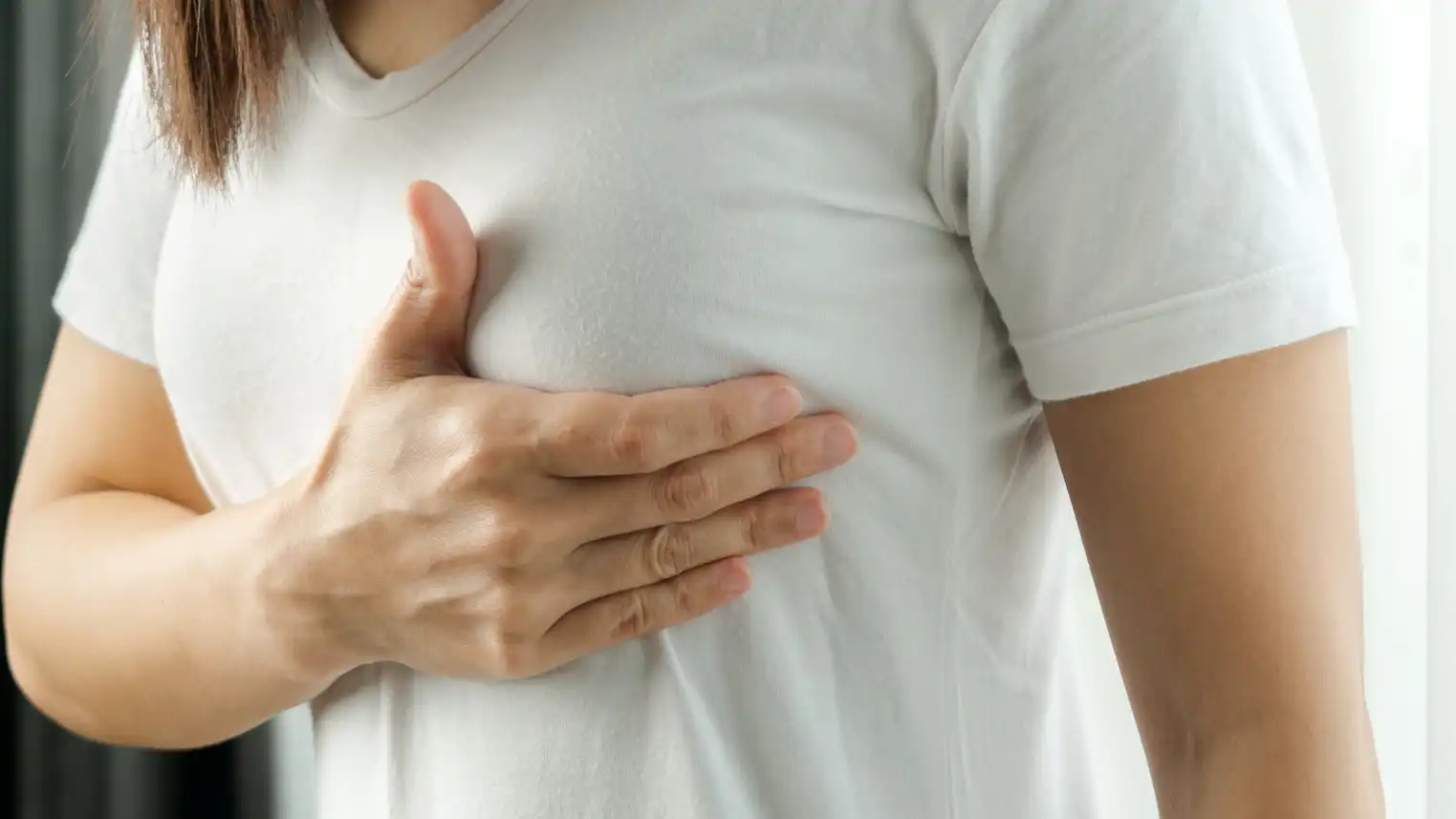
What causes sore breasts after menopause is a slightly different question than what causes it earlier in the transition, since your ovaries are no longer the main source of fluctuating hormones by this point. Fat tissue and other sources in the body continue to produce small amounts of oestrogen after menopause, and this, alongside changes in breast tissue composition, medications, caffeine intake, or even an ill-fitting bra, can all contribute to ongoing soreness. As glandular tissue in the breast gives way to more fatty tissue over time, the way your breasts respond to these smaller hormone shifts can change too, which is part of why some women notice a different quality of soreness after menopause compared with what they experienced during the years leading up to it. Stress is a real contributing factor too, since it affects hormone balance more broadly, not just the reproductive hormones most people associate with menopause, and poor sleep, itself common during this transition, can compound the effect further.
Why sore breasts menopause happens specifically at this stage, rather than settling immediately once periods stop, comes down to how gradually your hormone levels decline. Oestrogen doesn’t drop to zero overnight for most women, it continues fluctuating at lower levels for months or years afterward, which is why breast tenderness can persist well past your final period rather than disappearing the moment menopause is confirmed.
Sore breasts menopause after hysterectomy is a distinct scenario that deserves its own explanation. When both ovaries are removed during a hysterectomy, oestrogen levels drop abruptly rather than gradually, a real shock to your system compared with the years-long decline of natural menopause. This sudden hormone drop can trigger the same trademark menopause symptoms, often more intensely than the natural transition produces, and breast tenderness can be part of that picture as your body adjusts to the sudden change. The timeline is also different, rather than months or years of fluctuating hormones, your body is adapting to a fixed, immediate drop, which is partly why symptoms after this kind of surgery can feel more sudden and more pronounced than the gradual build-up most women describe with natural menopause. If you’ve had a hysterectomy with ovary removal and you’re experiencing new or worsening breast soreness, that’s a conversation to have with us specifically in the context of your surgical history, since your hormone picture is different from someone going through natural menopause, and the timing of any treatment decisions may need to be considered sooner rather than later.
Can sore breasts mean menopause, or could it be an early sign of something else entirely? For most women, yes, breast soreness is a genuine, well-recognised menopause symptom, and it’s often one of the earlier signs that the transition has started, sometimes appearing before more well-known symptoms like hot flushes. That said, breast pain has other possible causes too, so it’s the pattern alongside your other symptoms, not breast soreness in isolation, that points toward menopause.
Sore breasts before menopause, in the lead-up to your final period, usually follows the cyclical pattern already described, tied to the hormone fluctuations of perimenopause. Sore breasts early menopause is a slightly different question depending on what’s meant by “early”, if it means early in the transition, the same cyclical pattern applies, but if it refers to the clinical condition of menopause occurring before age 45, that’s a distinct situation that benefits from its own assessment, since the underlying causes and management can differ from a typically timed transition.
Are sore breasts normal during menopause? Yes, entirely, this is one of the most common symptoms of the transition, and are sore breasts common during menopause is really the same reassurance in different words, affecting the clear majority of women at some point. Are sore breasts part of menopause in the sense of being a recognised, expected symptom rather than an oddity, absolutely, it sits alongside hot flushes and irregular periods as one of the transition’s well-documented effects. It’s easy to feel like an unusual symptom deserves extra worry precisely because it’s less talked about than hot flushes, but breast soreness has simply had less public attention, not less clinical recognition, and there’s no reason to treat it as more concerning than any other common menopause symptom on that basis alone.
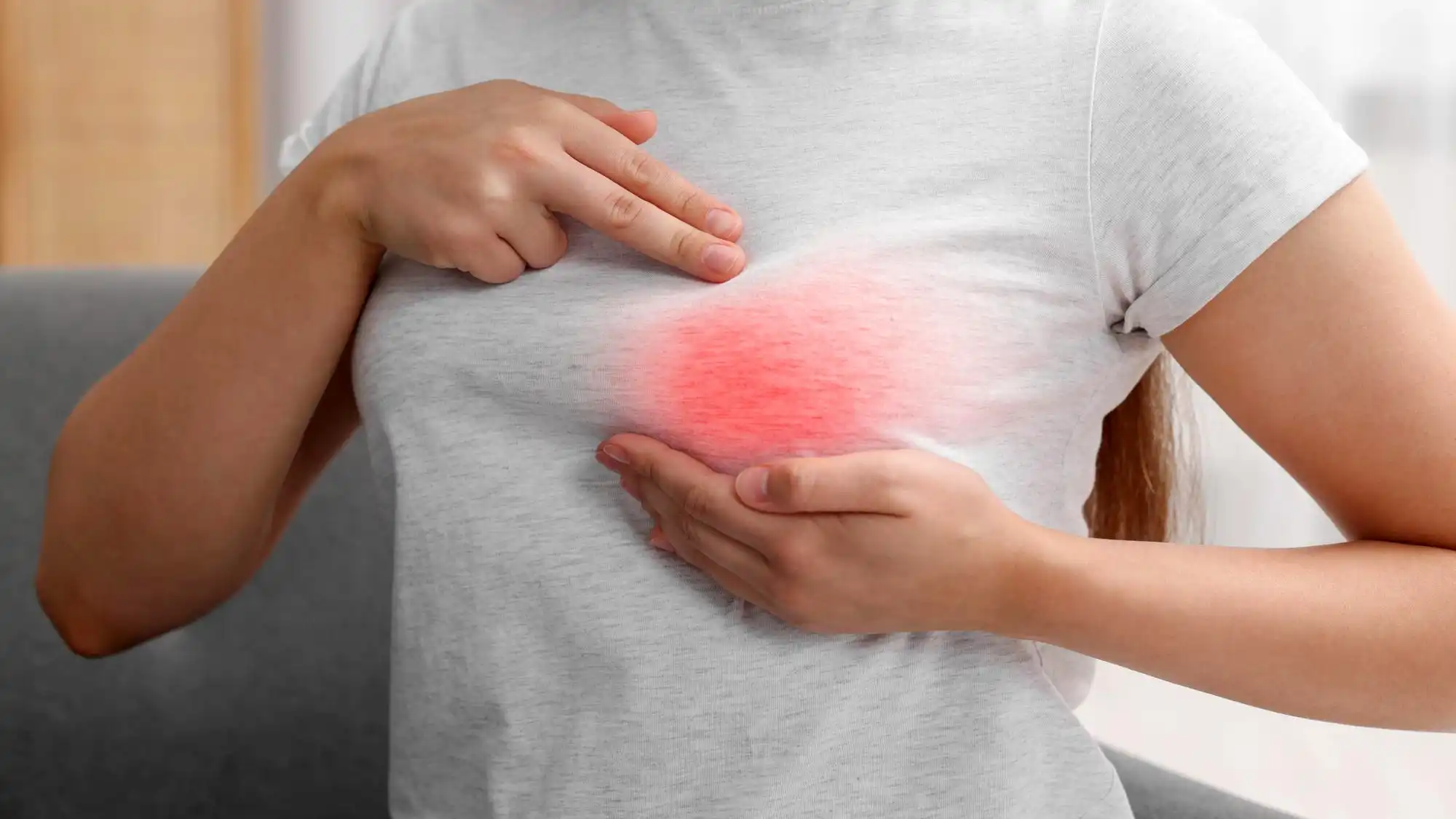
When to worry about breast pain during menopause comes down to a short, specific list of features, not the presence of pain itself. Current clinical guidance is reassuring here, for women over 40 with breast pain and a normal clinical examination, imaging isn’t routinely needed, and research shows the rate of picking up an invasive problem in this situation is very low, around 0.6% when pain is the only symptom and examination is normal. Pain alone, in other words, isn’t usually the thing to worry about, it’s the specific features alongside it that matter, and a proper clinical examination is what actually decides whether further investigation is needed, not the presence of discomfort by itself.
What does need prompt assessment:
If any of these apply to you, that’s a reason to get seen properly with us rather than wait and see. The NHS has further detail on these red-flag signs if you’d like to read more.
HRT and sore breasts have a real, well-documented connection that deserves an honest explanation before you start treatment. Breast tenderness is a recognised side effect of hormone replacement therapy, occurring in around 29% of women on oestrogen and 16% on progesterone individually, and in trials of combined HRT, roughly a third of women who hadn’t had breast tenderness before starting treatment developed it within the first year, compared with about 12% on placebo. This doesn’t mean HRT isn’t the right choice for you, for many women it’s an effective way of managing the broader menopause transition, but it does mean that if your breasts become more tender after starting or adjusting HRT, that’s a recognised, usually manageable effect rather than something unexpected or alarming. The tenderness tends to be dose-dependent, so if it’s bothersome, adjusting the dose or the specific hormone combination is often enough to settle it, which is exactly the kind of fine-tuning that’s easier to get right with a proper follow-up appointment than by simply stopping treatment altogether.
Menopause sore breasts treatment usually starts with simple, practical measures before anything more involved.
For persistent or more significant discomfort, a proper conversation with us makes sense, since the right next step depends on your specific pattern, whether the soreness is cyclical or non-cyclical, whether HRT is involved, and what your examination shows. Simple measures are a reasonable starting point for most women, but they’re not a substitute for an assessment if the pattern doesn’t fit what’s typical or if it’s genuinely affecting your day-to-day life.

Dr Raquel Delgado is a private GP in London with more than 20 years of clinical experience in general practice, women’s health, and hormonal care. She has a particular focus on doctor-led, natural-looking aesthetic treatments for women, and consults in both English and Spanish. Every consultation is with Dr Delgado personally, giving you the same clinician’s judgement and continuity of care each time.
If breast soreness is affecting your daily life, or you’re not sure whether what you’re feeling fits the usual pattern, that calls for a proper assessment rather than guesswork. In Dr Raquel Delgado‘s experience, a clear clinical examination alongside understanding your wider menopause picture is usually all it takes to separate routine hormonal soreness from something that needs a closer look. You can read more about our approach on our Women’s Health page, our GP services more broadly, or on our homepage for a wider view of the practice. Our Wellness Library and Resources sections also have further reading if you’d like to explore the broader menopause picture in your own time. To arrange a consultation, contact us directly or reach out using the details below:
A few signs call for prompt attention rather than waiting:
If any of these apply to you, that needs proper assessment with us rather than being left to settle on its own.
No, breast pain has several possible causes beyond menopause, including cyclical hormonal changes earlier in life, medications, or a benign breast condition. During the menopause transition specifically, it’s one of the more common and well-recognised symptoms, but the pattern alongside your other symptoms is what points toward menopause, not breast pain alone.
For most women, yes, breast tenderness tends to ease once hormone levels stabilise in the years following your final period, though it can persist for months or occasionally longer in some women. If it’s new, worsening, or hasn’t settled after a reasonable period, that calls for a proper check rather than continuing to wait it out.
Yes, stress affects hormone balance beyond the reproductive hormones most closely linked to menopause, and it can heighten your overall sensitivity to pain, including breast tenderness. Managing stress is a practical, evidence-supported part of managing this symptom, not just a general wellness suggestion, and it’s one of the few factors in this whole picture that’s genuinely within your control day to day.
Yes, this is a genuinely underrated factor. A bra that’s too tight, doesn’t offer enough support, or simply isn’t the right shape for how your breasts have changed can add mechanical strain on top of the hormonal soreness already happening, particularly if you’re active or on your feet for long periods. Being refitted periodically through this transition, rather than assuming your usual size still fits, is a simple change that helps some women considerably.
Not necessarily. Current guidance supports skipping imaging for isolated breast pain with a normal clinical examination in women over 40, since the likelihood of picking up something serious in that situation is very low. A proper clinical examination with us is the right first step, and imaging is considered based on what that examination shows, not automatically for pain alone.
This article is for general information and does not replace a personal consultation. If you notice a new lump, nipple discharge, or any of the signs above, please get in touch with us promptly.
Webdesign by EyeMedia Creative