


Last Updated: September 12th, 2026
Reading Time: 9 mins
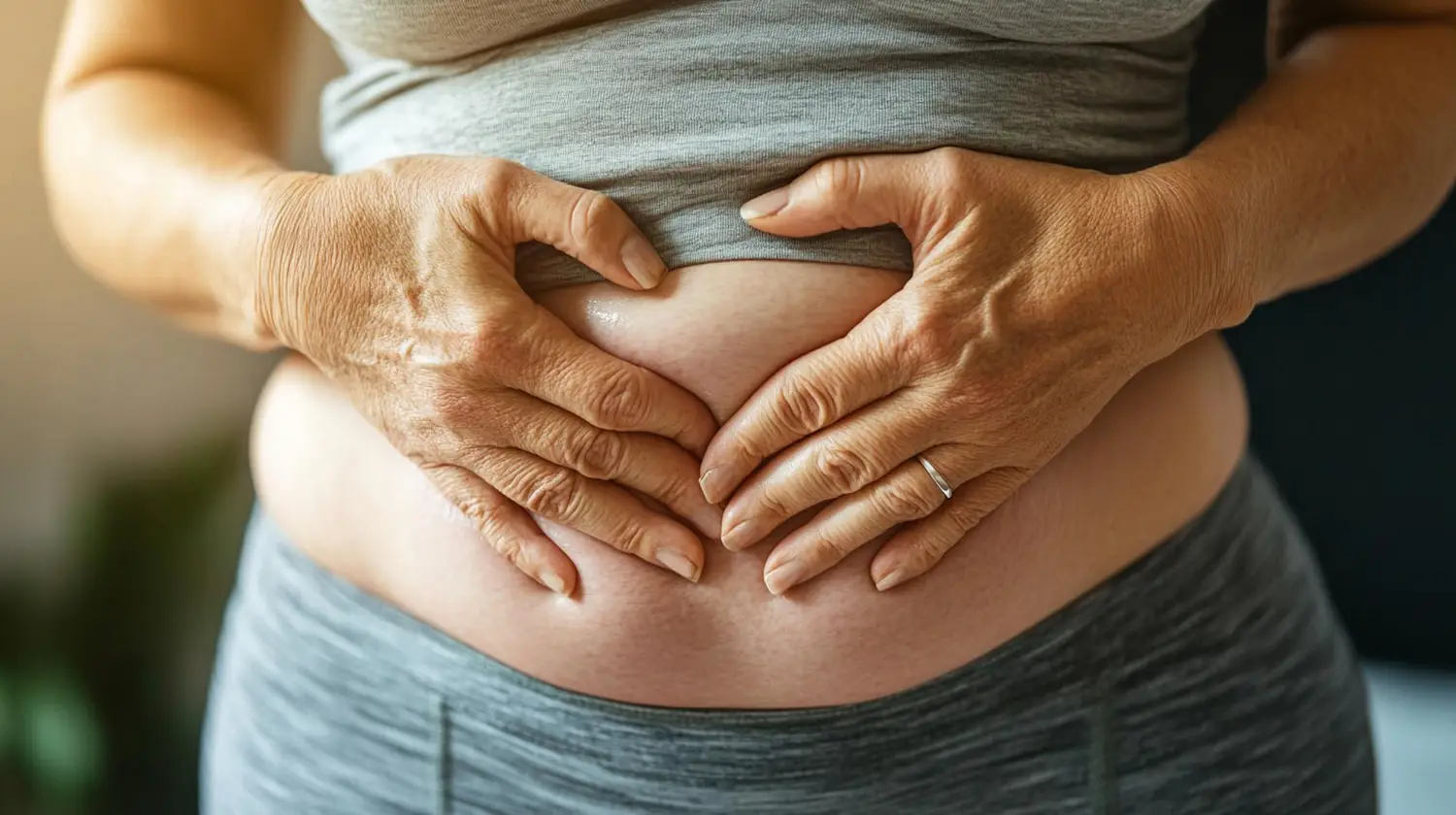
Yes, menopause belly fat is genuinely different from ordinary weight gain, and understanding why can save you a lot of frustration. It comes from a shift in where your body stores fat, not simply from eating more or moving less, which is why the number on your bathroom scale can stay exactly the same while your waistband tells a completely different story.
Many women notice their clothes fitting differently around the middle years before anyone even mentions menopause, and it can feel confusing when your weight hasn’t changed but your shape clearly has. This guide walks through what’s actually happening, how menopause belly weight redistribution differs from general weight gain, and what genuinely helps.
Is menopause belly a real thing, or just a phrase women use to describe feeling bloated or self-conscious? It’s a genuine, well-documented pattern of fat redistribution that happens as oestrogen levels fall, and it affects most women moving through perimenopause and menopause to some degree, not a small or unusual minority.
The key difference from ordinary weight gain is where the fat goes, and why. During your reproductive years, oestrogen encourages your body to store fat around your hips, thighs, and bottom, the classic pear shape many women recognise. As oestrogen drops, that storage pattern shifts toward your abdomen instead, favouring the deeper visceral fat that sits around your internal organs rather than the softer fat just under your skin. This is different from menopause belly weight gain in the broader sense, where you might simply be eating more, moving less, or dealing with a slower metabolism across your whole body. Belly-specific fat redistribution can happen even if your total weight barely changes at all.
There’s also a muscle-loss piece that often gets missed entirely. Falling oestrogen speeds up the natural loss of muscle mass, and because muscle burns more calories at rest than fat does, losing it lowers your metabolic rate further, on top of the redistribution itself. Put those two things together, less muscle and more fat specifically around your middle, and you can genuinely go up a dress size at the waist while your arms and legs look much the same, all without your weight moving on the scale by even a pound.
The numbers make this clearer. In postmenopausal women, belly fat typically accounts for 15% to 20% of total body weight, compared with just 5% to 8% in women before menopause. That’s not a subtle shift, it’s a real structural change in how your body is built, which is exactly why treating it the same as ordinary weight gain rarely works well.
If your main concern is broader weight gain across your whole body rather than this belly-specific pattern, our earlier guide on weight gain in menopause covers that side of things in more depth.

What causes menopause belly fat comes down to a combination of hormonal, muscular, and lifestyle factors working together, rather than any single cause acting alone.
The primary driver is hormonal. As oestrogen falls, your body’s fat-storage pattern shifts toward the abdomen, and because testosterone becomes relatively more dominant once oestrogen drops, it further favours abdominal fat storage over the hip-and-thigh pattern you may be used to. Some women describe this pattern more simply as a menopause hormonal belly, since it tracks so closely with where they are in the menopause transition, often appearing gradually over eighteen months to two years rather than overnight.
This matters beyond appearance, too. Visceral fat, the type that accumulates behind your abdominal muscles during this shift, is linked to a higher risk of insulin resistance, cardiovascular disease, and type 2 diabetes. It’s a genuinely useful reason to take this seriously as a health matter, not only a cosmetic one.
A few other factors typically layer on top of the hormonal shift:
None of these factors are within your control in the sense of stopping the menopause transition itself, but several of them, sleep, activity, and stress in particular, are genuinely modifiable, which is worth remembering if this list feels discouraging to read.
It’s worth separating menopause belly bloat from the fat redistribution described above, because they feel similar day to day but come from different mechanisms and need different responses.
Bloat is usually caused by fluid retention or digestive changes, gas, water retention, and shifts in gut motility that are also common during hormonal fluctuation, and it tends to come and go within hours or days. It often feels tight, uncomfortable, or swollen rather than simply larger, and it’s frequently worse in the evening or after certain meals. Fat redistribution, on the other hand, is a slower, structural change that builds gradually over months, and doesn’t ease off with a better night’s sleep or a lighter meal the way bloat usually does.
If you’re noticing broader menopause stomach issues alongside the bloating, such as increased wind, changes in bowel habits, or new food sensitivities, that’s worth mentioning to us directly, since digestive symptoms during perimenopause can sometimes have more than one underlying cause and are worth assessing properly rather than assuming they’re simply hormonal.
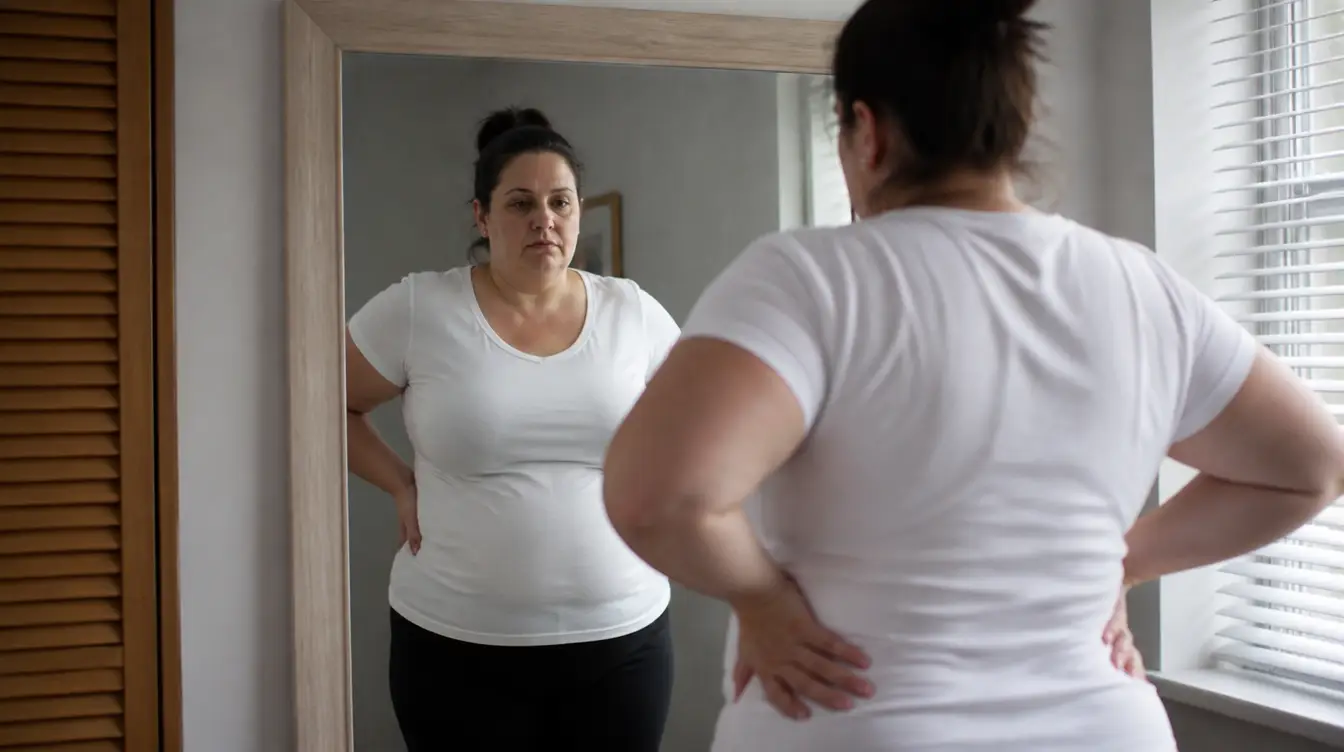
What does menopause belly look like in practice? Most women describe a firmer, more rounded fullness low across the abdomen, quite different from the softer, more evenly distributed weight some women carry elsewhere on the body. It tends to sit high and central rather than spreading toward the hips, which is exactly what you’d expect from fat collecting around and behind the abdominal muscles rather than just under the skin.
Some women say their menopause belly looks pregnant, particularly by the end of the day or after eating, because the combination of visceral fat and any accompanying bloat can push the lower abdomen outward in a way that mimics an early pregnancy silhouette. This is genuinely one of the more emotionally difficult parts of the menopause transition for many women to talk about openly, and it’s a completely valid thing to want addressed, not something to just accept as inevitable or unimportant.
Others describe more of a menopause belly bulge concentrated just below the navel, sometimes alongside a genuine loss of definition through the waist even when the rest of the body hasn’t changed much at all. In Dr Raquel Delgado‘s experience seeing women through this transition, the exact shape and location of this change varies quite a bit from person to person, which is part of why a one-size-fits-all approach to managing it so often falls short.
How to get rid of menopause belly fat is less about chasing a single fix and more about consistently supporting the things that have actually shifted, muscle mass, activity, sleep, and stress, rather than expecting a quick before-and-after result.
Strength and resistance training make a genuinely outsized difference here, more than cardio alone tends to. Building and maintaining muscle mass helps counter the metabolic slowdown described earlier, and it’s one of the few interventions with strong evidence behind it specifically for this kind of fat redistribution. The NHS recommends at least 150 minutes of moderate activity a week, alongside regular muscle-strengthening exercise, as a sensible general target for this stage of life.
Beyond exercise, a few other approaches genuinely help when it comes to how to shift menopause belly fat over time:
For many women, the missing piece isn’t willpower, it’s having an accurate picture of what’s actually driving the change in their specific case. Our Menopause Weight Management service is built around exactly that, a proper assessment of your hormonal picture, muscle mass, and metabolic health, rather than a generic diet plan applied the same way to everyone who walks through the door.

Dr Raquel Delgado is a private GP in London with more than 20 years of clinical experience in general practice, women’s health, and hormonal care. She has a particular focus on doctor-led, natural-looking aesthetic treatments for women, and consults in both English and Spanish. Every consultation is with Dr Delgado personally, giving you the same clinician’s judgement and continuity of care each time.
If menopause belly fat is affecting your confidence or your health more broadly, that’s genuinely worth a proper assessment rather than another round of generic diet advice. We look at your hormonal picture, your muscle mass, your sleep, and your stress levels together, so the plan we build actually fits what’s driving the change for you specifically, not a one-size-fits-all checklist copied from somewhere else.
You can read more about our approach on our Women’s Health page, or our GP services more broadly if this is one of several things you’d like assessed together. To arrange a consultation, contact us directly or reach out using the details below:
If you’re noticing sudden, significant weight change alongside other new symptoms, such as unusual fatigue, changes in bowel habits, or abdominal pain that doesn’t settle, that’s worth getting checked promptly rather than assuming it’s simply menopause.
Does menopause belly go away entirely depends on what’s driving it in your particular case, but for many women it improves significantly once hormone levels stabilise after menopause, combined with consistent changes to strength training, sleep, and stress management. It rarely reverses completely on its own without any changes, since the underlying muscle loss and fat redistribution don’t undo themselves automatically over time.
How long does menopause belly last varies quite a bit between women, but the pattern typically continues throughout perimenopause and the years immediately following menopause, often several years in total, unless the underlying factors, hormones, muscle mass, sleep, and stress, are actively addressed along the way.
Yes, and this is one of the most misunderstood parts of the whole picture. Because it’s a redistribution of fat rather than simply an increase in it, your overall weight can stay exactly the same while your waist measurement increases and your body composition shifts underneath, less muscle, more abdominal fat.
HRT can help some women by addressing the hormonal driver behind the fat redistribution, though it isn’t a weight-loss treatment on its own and works differently for each person. Whether it’s appropriate depends on your wider health picture, which is exactly the kind of thing worth discussing with us individually rather than assuming one approach fits everyone.
This article is for general information and does not replace a personal consultation. If you have concerns about sudden or significant changes in your weight or health, please get in touch with us promptly.
Webdesign by EyeMedia Creative