

Last Updated: August 20th, 2026
Reading Time: 7 mins
Cryotherapy on skin tags is one of the most common and effective ways to remove them, but there’s more to it than simply freezing something off. The real value of doing this properly isn’t the freezing itself, it’s confirming what you’re treating is genuinely a skin tag before anyone touches it with liquid nitrogen. This guide covers how the treatment actually works, what it feels like, the risks worth knowing, and why that first assessment matters more than people usually realise.
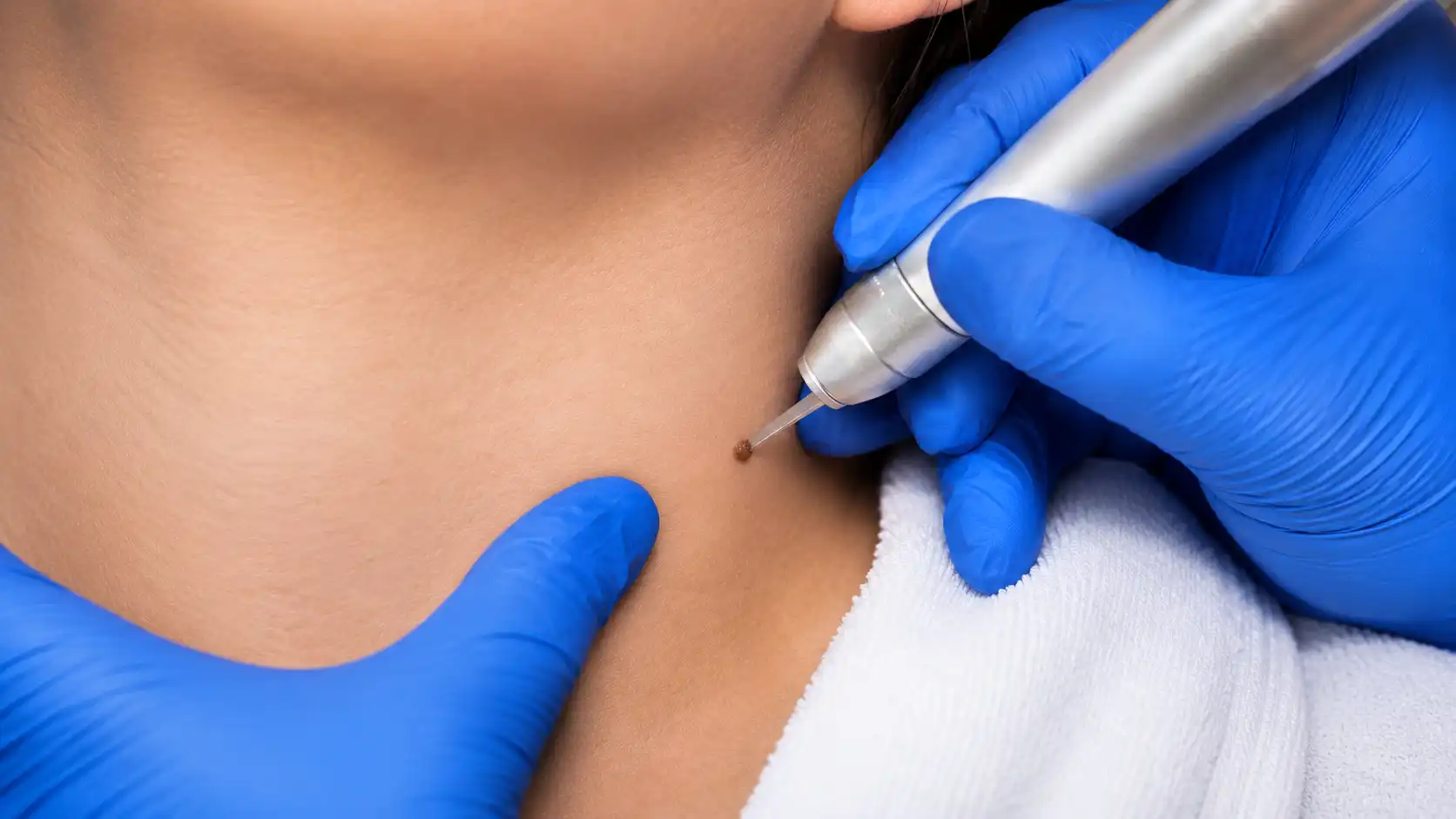
Freezing skin tags with cryotherapy works by applying liquid nitrogen, at around -196°C, directly to the tag using a spray device or a precise applicator. Skin tag cryotherapy destroys the cells at the base of the tag, cutting off its blood supply and causing it to die and eventually fall away. Cryotherapy for skin tags is quick, typically taking only seconds per lesion, and doesn’t usually require any anaesthetic since discomfort is brief. Skin tag removal freeze off is essentially what’s happening at a cellular level, the cold damages the tag’s stalk cells specifically, while leaving the surrounding healthy skin largely unaffected when performed correctly. Cryotherapy to remove skin tags has a strong evidence base behind it too, with clinical studies reporting regrowth in only around 5% of treated tags, a genuinely low recurrence rate for what’s a very quick procedure.
Not usually, but it’s worth understanding the two real risks properly rather than assuming freezing anything off your skin is entirely without consequence.
Not every small growth on the skin is a skin tag, and this is genuinely the most important thing to understand before booking any treatment. Doctors use what’s known as the ABCDE approach to flag lesions that need a proper look rather than immediate treatment: asymmetry, an irregular or jagged border, uneven or multiple colours, a diameter larger than roughly 6mm, or a lesion that’s visibly changed, grown or evolved recently. A genuine skin tag is usually soft, skin-coloured or slightly darker, and has stayed roughly the same for a while. If something on your skin ticks any of the ABCDE boxes, that’s a reason to have it assessed properly rather than frozen off without a second thought, which is exactly why a consultation before treatment matters.
Can cryotherapy damage skin? In rare cases, yes, particularly if it’s done without proper training or equipment. The main risks include:
Pigmentation changes are worth taking seriously. Studies on cryosurgery more broadly report hypopigmentation, a lightening of the treated skin, in a meaningful proportion of patients, and the risk is notably higher in darker skin tones. If you have a darker skin tone, this is worth discussing openly during your consultation so expectations are set honestly from the outset.
Does removing skin tags hurt is one of the most common questions we’re asked, and the honest answer is a little, briefly. Can you use cryotherapy on skin tags without significant discomfort, yes, most people describe a short stinging or burning sensation lasting only a few seconds during application, followed by mild tenderness for a short while afterwards. Will cryotherapy remove skin tags painlessly for absolutely everyone, not quite, but no anaesthetic is typically needed, and the discomfort is genuinely brief rather than something to be anxious about.
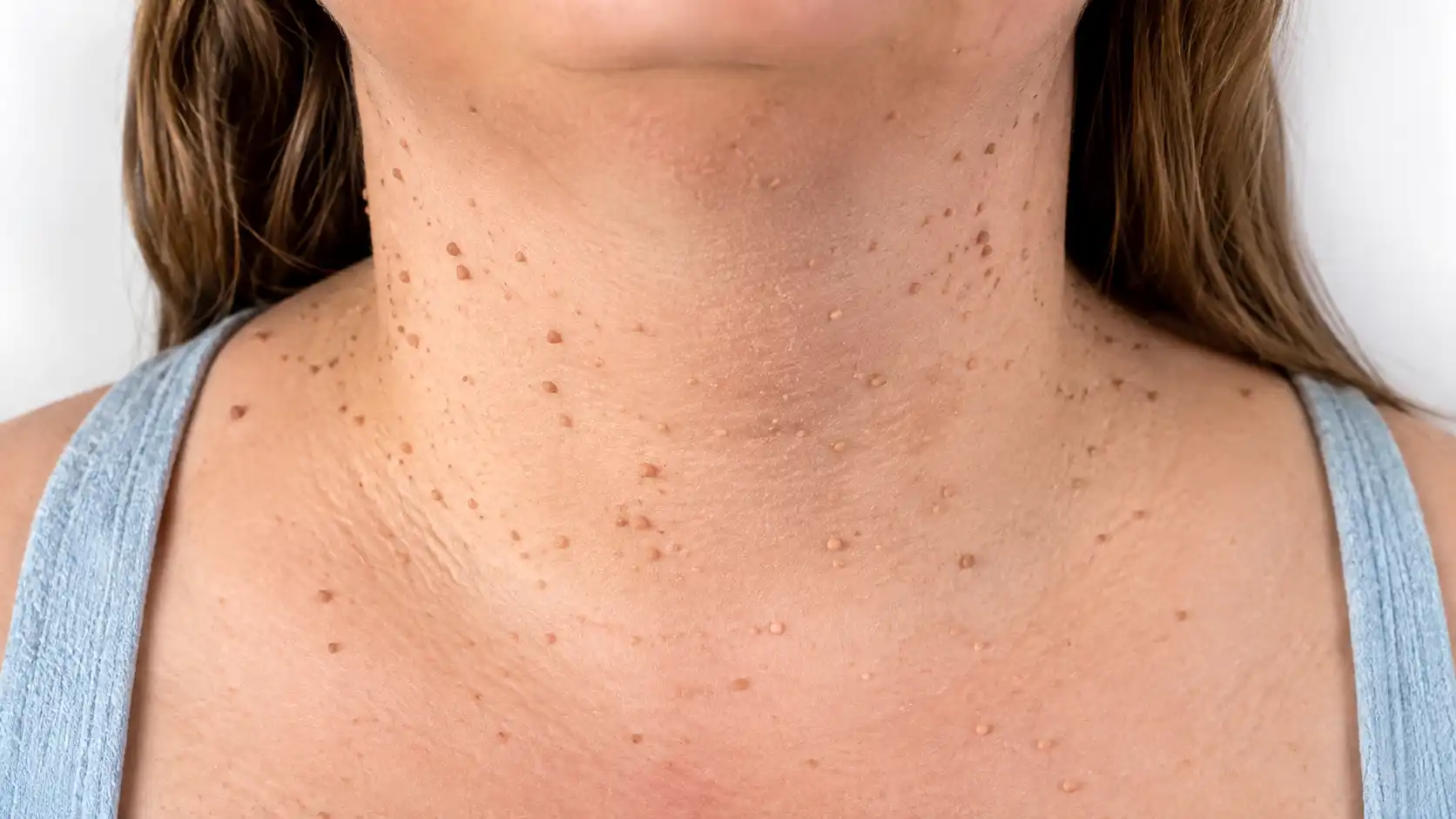
Cryotherapy on face treatment for skin tags, particularly around the eyes, jawline or neck, is very common, since these are areas where tags frequently develop. The skin here is thinner and more sensitive, so a doctor will typically use a more controlled, precise application to minimise any risk to the surrounding area, and multiple small tags can often be treated in the same session.
Cryotherapy stages of healing generally follow a predictable pattern, and cryotherapy how long to heal is typically seven to fourteen days from start to finish.
What to Expect Day by Day
Healing time can vary depending on the size of the tag and its location, with areas of thinner skin sometimes healing slightly faster.
Skin tag cryotherapy aftercare is straightforward but matters for a clean result. Keeping the area clean and dry, avoiding picking at the scab, and protecting it from sun exposure while it heals all help reduce the risk of scarring or pigmentation changes. Most people can return to normal activities immediately, though it’s worth avoiding swimming pools or very sweaty exercise for a day or two while the area settles.
Liquid nitrogen skin tag removal isn’t the only option, and it’s worth knowing how it compares to the alternatives.
Snip excision, physically cutting the tag off with fine scissors, is another common method, and it tends to give an immediate result rather than the days-long process of freezing and scabbing. Cryotherapy is generally preferred for smaller or multiple tags since it’s faster to perform and doesn’t require local anaesthetic, while excision may suit larger, single tags better.
Can liquid nitrogen remove skin tags safely at home? This is where the real difference lies. Clinical liquid nitrogen reaches around -196°C, cold enough to reliably destroy the stalk cells at the base of a tag in one treatment. Consumer aerosol freeze kits typically only reach around -57°C, often not cold enough to fully freeze the base, which is why at-home treatment frequently leads to incomplete removal, uneven results, or the tag simply returning. At-home kits also skip the assessment step entirely, which, given what we covered earlier about the ABCDE warning signs, is the part that actually matters most for safety.
How Many Treatments Will You Need?
How many cryotherapy treatments for skin tags depends on the tag itself, but many are fully resolved after a single session. Larger or more stubborn tags occasionally need a second treatment a few weeks later. Given the roughly 5% regrowth rate reported in clinical studies, most people don’t need repeat treatment on the same tag once it’s properly healed.
If you’re considering cryotherapy skin tag removal London-wide, the most important first step is a proper assessment, not booking straight into treatment. We check each lesion carefully before anything is treated, and in many cases can treat suitable lesions during the same appointment.
Read more about the treatment on our Cryotherapy for Benign Skin Lesions page, explore our wider Skin Rejuvenation options, or Book An Appointment directly. Pricing starts from £90 for a single lesion, with reduced per-session pricing for multiple lesions treated together, and the initial consultation fee is waived if treatment goes ahead the same day.
Dr Raquel Delgado has over 20 years of clinical experience as a GP, with a particular focus on safe, doctor-led skin treatments, consulting in both English and Spanish.
This guide is general information and isn’t a substitute for a proper consultation. Any lesion that’s changed recently, looks unusual, or ticks any of the ABCDE warning signs should always be assessed by a doctor before treatment.
WhatsApp: +44 7879710046
Email: dr@drraqueldelgado.com
Contact Us
Opening Hours: Mon – Fri, 9.30am – 8pm
Saturday: Online AM appointments only

Usually not. When performed correctly, cryotherapy typically leaves minimal to no visible scarring, though this can depend on the size of the tag, your skin type, and how well the area is cared for while healing.
Neither is universally “better,” they suit different situations. Cryotherapy is generally quicker for smaller or multiple tags and doesn’t require anaesthetic, while excision may be preferred for larger, single tags where an immediate result is wanted.
Rarely. The NHS generally classes skin tag removal as cosmetic and doesn’t routinely offer it unless a tag is causing a genuine medical problem, such as repeated bleeding or irritation, which is why most people seek private treatment.
Pricing varies by clinic and number of lesions treated. Our current pricing starts from £90 for a single lesion, with lower per-session rates when treating multiple lesions together, full details are on our Fees page.
If it’s changed size, shape or colour recently, has an irregular border, looks uneven in colour, or is larger than about 6mm, it’s worth having assessed properly rather than treated straight away.
If any of this sounds relevant to you, Contact Us and we’ll help you arrange a consultation to check your lesion and discuss whether cryotherapy is the right option.
Webdesign by EyeMedia Creative