

Last Updated: September 9th, 2026
Reading Time: 8 mins
Bleeding between periods is one of the most common reasons women come to see us, and the first question we ask is always the same: is this a one-off, or has it happened more than once? That single distinction shapes almost everything else. Bleeding between periods that happens once and doesn’t return is usually nothing to worry about. Bleeding between periods that keeps happening, or that comes with other symptoms, is a different picture. This piece walks through the common causes, what the color and pattern can tell you, and when it’s time to get it checked rather than wait it out.
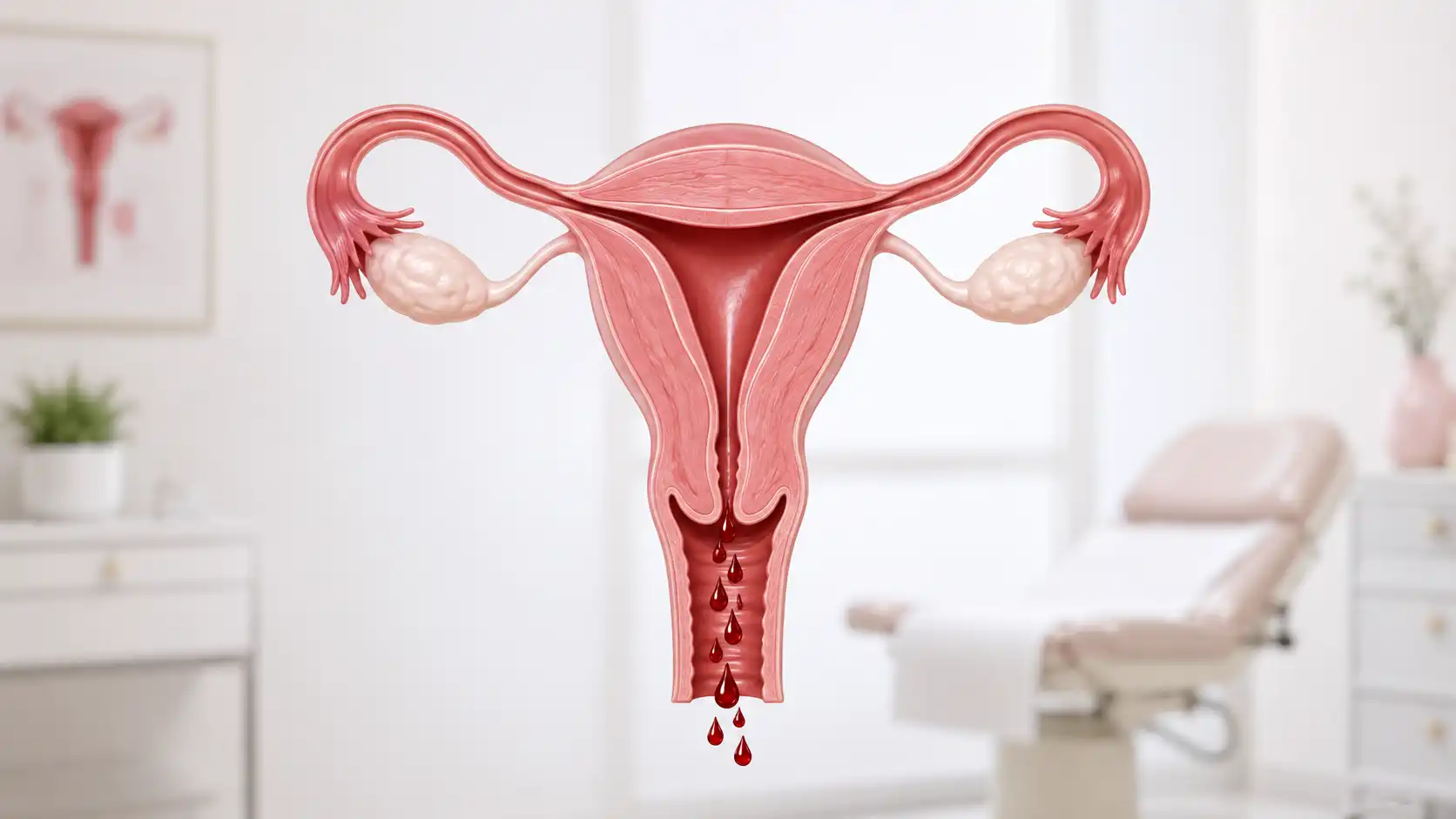
Bleeding between periods, sometimes called intermenstrual bleeding, is unscheduled vaginal bleeding that happens outside your usual period. Occasional light spotting, particularly around ovulation, is common and not usually a concern. Recurring, heavy, or unexplained bleeding between periods is a different picture and generally calls for a GP review.
Roughly a quarter of women experience some form of intermenstrual bleeding at least once, most commonly linked to ovulation, hormonal contraception, or a recent change in birth control. What matters clinically isn’t whether it’s happened, but whether it’s a pattern. One episode that resolves on its own rarely needs investigation. Bleeding that returns month after month does.
What cause bleeding between period comes down to a fairly short list of common explanations, most of which are benign, alongside a smaller number that need proper assessment.
Bleeding between periods reasons range from ovulation spotting, a small drop in oestrogen mid-cycle that can cause light bleeding for a day or two, through to hormonal contraception, infections such as chlamydia, and structural causes like polyps or fibroids in the womb. Hormonal imbalance more broadly, including thyroid dysfunction, can also disrupt the cycle enough to cause bleeding at unexpected times.
What can bleeding in between periods mean depends on three things: timing, colour, and whether it’s a single event or a repeating one. A single episode of light spotting around ovulation, mid-cycle, brownish in colour, usually reflects the normal hormonal dip that happens as oestrogen briefly drops before rising again. Bright red bleeding that turns up at a different point each cycle, or bleeding between periods means something different again if it’s heavy enough to need protection, points more toward an active cause, contraception, an infection, or a structural issue, rather than a passing hormonal fluctuation. The pattern is doing most of the diagnostic work here, more than the bleeding itself.
Bleeding between periods brown or dark in colour is usually old blood that’s taken longer to leave the body, which oxidises and darkens, rather than fresh active bleeding. Bleeding between periods dark blood in small amounts, particularly around ovulation or right before or after your period proper, is one of the more reassuring presentations, since it typically reflects slower, lighter flow rather than a new bleeding source. Bright red blood, by contrast, suggests more active bleeding and is worth noting if it recurs, since colour alone isn’t a diagnosis but it does help us narrow down what’s likely going on.

Bleeding between periods heavy enough to need more than a liner, or bleeding between periods and pain occurring together, is a different situation from light spotting and calls for more prompt attention. Pain alongside bleeding can point toward fibroids, polyps, or in some cases infection. If you’ve recently missed a period and are also having abdominal or pelvic pain with bleeding, that combination needs same-day assessment to rule out an ectopic pregnancy, a genuine medical emergency rather than something to monitor at home.
Bleeding between periods on the pill, often called breakthrough bleeding, is common, particularly in the first three months of starting a new hormonal contraceptive or after switching brands or doses. It happens because the womb lining is adjusting to a new, steadier hormone level rather than the natural monthly rise and fall it’s used to. This usually settles within a few cycles. If it doesn’t, or if it starts well after you’ve been stable on the same contraception for months, that’s a pattern to bring back to your GP rather than assume it will resolve on its own.
Bleeding between periods stress is a genuine, evidence-backed connection, not just a convenient explanation. Chronic stress keeps cortisol persistently elevated, which suppresses gonadotropin-releasing hormone and disrupts the hypothalamic-pituitary-ovarian axis, the system that regulates your cycle. Sustained high stress, from prolonged workplace pressure or caregiving load, for example, has been linked in recent research to repeated irregular cycles, unexpected bleeding, and heavier or more painful periods. Can bleeding between periods be caused by stress on its own, without any other contributing factor? Yes, though if it’s a recurring pattern rather than a single stressful period in your life, it’s still sensible to rule out other causes alongside it rather than assuming stress explains everything.
Can fibroids cause bleeding between periods is a fair question given how common fibroids are, they affect roughly three-quarters of women by age 50. Among women specifically diagnosed with uterine fibroids, around a third report bleeding between periods, compared to about one in seven women without fibroids, so the link is real, though most women with fibroids never need treatment for them unless symptoms become disruptive.
Signs that fibroids might be behind your bleeding pattern include:
An ultrasound scan is usually the simplest way to confirm whether fibroids are contributing, and it’s a straightforward, non-invasive first step rather than something to feel anxious about.
Do you get a period after breakthrough bleeding is a common follow-up question, and generally yes, breakthrough bleeding doesn’t replace your period, it’s a separate, usually lighter episode that happens outside your normal cycle. Your actual period should still arrive roughly on schedule afterward.
This is particularly relevant if you’ve recently started or changed hormonal contraception, since breakthrough bleeding in that context is your body adjusting to a new hormone level, not a sign your cycle has reset. If your period seems to have disappeared entirely, merged confusingly with the breakthrough bleeding, or stopped coming at a predictable time altogether, that’s a change worth flagging at your next review rather than waiting several more cycles to see what happens. Most women find their cycle settles back into a predictable rhythm within two to three months of starting or switching contraception, and if it hasn’t by then, that’s the point to get it looked at properly.
Why do i keep bleeding in between periods, when it’s happened more than once, usually means whatever triggered the first episode hasn’t resolved on its own. Recurring bleeding between periods every month is the pattern most worth investigating properly, since a single cause, hormonal, structural, or contraception-related, is more likely to be identified once there’s a consistent pattern to examine rather than one isolated event. Keeping a simple note of when bleeding happens, how heavy it is, and any other symptoms alongside it makes this conversation with your GP considerably more productive than trying to recall it from memory weeks later.
Bleeding between periods perimenopause is one of the most common reasons women in their forties come to see us about this symptom. As oestrogen and progesterone levels fluctuate more erratically in the lead-up to menopause, cycles often become shorter, longer, heavier, or interspersed with unexpected bleeding between what used to be predictable periods. NICE’s menopause guidance, reviewed as recently as April 2026, is clear that changes to your cycle alongside vasomotor symptoms like hot flushes are part of how perimenopause is identified. That said, new or changing bleeding patterns in your forties still need proper assessment rather than being assumed to be “just perimenopause” without confirmation, since the two things can and do coexist with other causes.

A few patterns should prompt a GP review rather than watching and waiting:
Our GP Services are set up to see these presenting symptoms quickly rather than making you wait weeks for a routine slot.
If bleeding between periods has become a recurring pattern for you, or you’re simply not sure whether what you’re experiencing needs a closer look, that’s exactly the kind of thing worth bringing to a GP appointment rather than trying to self-diagnose. In our practice, we take a full history of your cycle, any contraception you’re using, and the pattern of bleeding, and arrange the right investigations, whether that’s an ultrasound, swabs, or bloodwork, based on what your history suggests.
You can read more about how we support women’s health and perimenopause specifically on our Women’s Health page, and current consultation pricing on our Fees page.
To arrange an appointment,
The most common causes are ovulation spotting, hormonal contraception, infections, and structural causes such as polyps or fibroids. Stress and perimenopause can also disrupt your cycle enough to cause it.
If it recurs over more than one cycle, comes with pelvic pain, happens after sex, or occurs more than twelve months after your periods have stopped, bring it to your GP rather than waiting to see if it settles.
It can be an early sign in some cases, particularly if it’s light spotting around the time your period was due, but it’s not a reliable indicator on its own. If your period is late and you’re bleeding with pain, seek prompt medical attention to rule out an ectopic pregnancy.
Yes, chronic stress disrupts the hormonal system that regulates your cycle, which can genuinely cause irregular or unexpected bleeding, though it’s still worth ruling out other causes if the pattern continues.
Webdesign by EyeMedia Creative