


Last Updated: October 26th, 2026
Reading Time: 10 mins
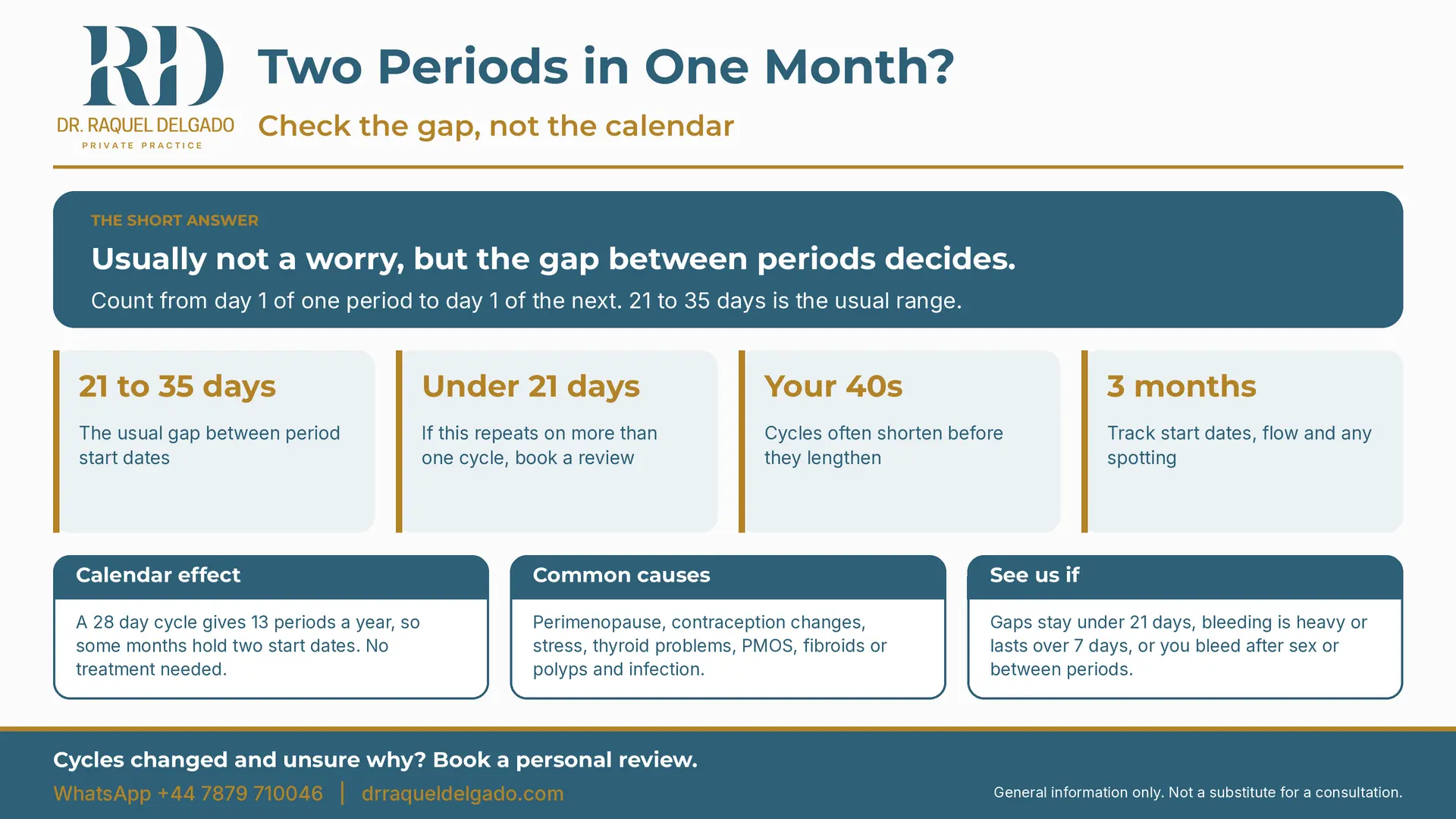
Two periods in one month are usually not a cause for worry, but the number of days between your period start dates decides whether it is a normal short cycle or something to check. A gap of 21 to 35 days between periods is within the usual range, so a 24 day cycle can easily put two bleeds into the same calendar month with nothing wrong. A run of gaps shorter than 21 days, very heavy bleeding or bleeding between periods is different and deserves a proper look. This guide explains what counts as a short cycle, why it happens so often in your 40s, how to tell a period from spotting and when to see us.
Key points
Is it normal to have two periods in one month? Often, yes. Most cycles run for around 28 days, but the NHS says gaps of 21 to 35 days are usual and counts a cycle as irregular only when the gap is under 21 days or over 35 days. The useful question is therefore not how many periods you had this month. It is how many days passed between the first day of one period and the first day of the next. Keeping a simple diary or using an app makes this easy to see.
Getting 2 periods in one month is sometimes just arithmetic. A 28 day cycle gives you 13 periods a year, but there are only 12 months, so at least one month will contain two start dates. Take a 27 day cycle with a period that begins on the 2nd. The next one begins on the 29th, and the one after on about the 25th of the following month. Having two periods in one month in this way needs no treatment, because your cycle length has not changed at all. A glance at your start dates is enough to tell this apart from a shorter cycle.

A short menstrual cycle is one where the gap between periods is getting close to or below the bottom of the usual range. Periods usually arrive every 21 to 35 days, so a period every 21 days sits at the edge, while periods two weeks apart or a period every 2 weeks fall outside it. Ovulation normally happens about 12 to 16 days before your next period starts. When the cycle runs short, ovulation has usually come earlier, and in some months it may not have happened at all.
Large studies of period-tracking data point the same way. On average, cycles get a little shorter through the 40s and then lengthen again after 50, and they become much less predictable from the mid-40s. These are averages, not rules for any one woman, but they match what we see in clinic: periods closer together are common in the late 40s and tend to give way to longer gaps later. A short cycle does not always announce itself, either. Some women notice lighter or heavier bleeding, new premenstrual symptoms or poorer sleep before the dates shift, which is why a simple diary helps.
This table shows how we read different patterns:
| Pattern | What it may mean | What to do |
| Two start dates in one month, gap of 26 to 30 days | Normal cycle and calendar effect | Keep tracking |
| Gap of 21 to 24 days, now and then | Within the usual range, common in your 40s | Track for 3 months |
| Gap under 21 days on more than one cycle | Irregular by standard definition | Book a review |
| Light bleeding between two normal periods | Possible spotting, not a period | See the spotting section below |
| Heavy flow, clots or dizziness with the extra bleed | Needs checking soon | Book promptly |
Two periods in one month for the first time can be unsettling, especially if your cycles were regular for years. A single early period with your usual flow does not normally need action. Note the start date, watch the next two cycles and see whether the gap settles back to what you expect. Book a review if it happens again, if the gap keeps falling under 21 days, or if the bleeding is heavier than usual. If there is any chance you could be pregnant, do a pregnancy test first, because bleeding can be mistaken for a period.
Why am I having two periods in one month? Usually it is a short cycle, perimenopause or a hormonal trigger such as contraception, stress or a thyroid problem, and the list below shows how to tell them apart. Common causes of irregular periods are:
PMOS is a recent change. PCOS was renamed in 2026 to better reflect its hormonal and metabolic effects, and the new name is already in use across UK health information. The way it is diagnosed has not changed.
People often ask whether two periods in one month stress could be the cause. Stress and anxiety, weight change and over-exercising are all recognised causes of irregular periods, so it is a reasonable thing to consider. It is unlikely to be the only explanation if the pattern keeps repeating, so we look at the other causes too.
What causes two periods in one month in perimenopause comes down to hormones. As your ovaries make less oestrogen and release eggs less regularly, your cycle becomes unpredictable. A change to your periods is usually one of the first signs of perimenopause, and they may come more often or less often, while bleeding may get heavier or lighter. So can perimenopause cause two periods in a month? Yes. Early on, cycles often run shorter, and frequent periods in perimenopause can include months with an extra bleed. In some cycles ovulation does not happen at all, which is called an anovulatory cycle, and the timing of bleeding then becomes harder to predict. Our guide to anovulatory cycles explains this in more detail.
Later in the transition the pattern often reverses, with longer gaps and skipped periods. It is also still possible to become pregnant. Current guidance is to continue contraception for 2 years after your final period if you are aged 40 to 49, and for 1 year if you are 50 or over.
Bleeding twice in a month does not always mean two periods. A period usually needs a pad, tampon or cup and lasts several days, while spotting is light bleeding you notice when you wipe or on your underwear. Two light periods in one month may in fact be spotting around a normal cycle, so check whether the bleed lasted several days and followed a gap of at least 21 days. If it did not, treat it as bleeding between periods and not as a short cycle.
Bleeding between periods has different causes. Common ones include hormonal contraception, polyps or fibroids and sexually transmitted infections, and any unusual bleeding should be checked because it can occasionally be a sign of cancer. Our guide to bleeding between periods covers the one-off versus monthly pattern in detail.
One situation is urgent. If you have recently missed a period, have unusual vaginal bleeding and have pain anywhere in your tummy, that needs urgent medical help the same day, because it could be a sign of an ectopic pregnancy. Contact us straight away
Two periods in one month heavy bleeding is a combination we take more seriously, because repeated heavy bleeds can lead to low iron and anaemia. Heavy periods are usually defined as needing to change a pad or tampon every 1 to 2 hours, using two products together, bleeding for more than 7 days, passing clots bigger than about 2.5cm, or bleeding through to clothes or bedding. UK clinical guidance for perimenopause adds bleeding more often than every 3 weeks, bleeding after sex, dizziness or pelvic pain, regular spotting between periods and a change in the colour, smell or texture of discharge as reasons to be seen. The full list of warning signs is at the end of this guide.
Feeling tired or short of breath much of the time alongside heavy bleeding can be a sign of anaemia, and a blood test can check this. Our guide to heavy periods in perimenopause explains the usual causes.
When should you see a doctor about frequent periods? Book a review if your gap stays under 21 days across more than one cycle, if any bleeding is heavy, if you bleed after sex or between periods, if your periods last longer than 7 days, or if you are still bleeding after menopause. Bleeding that has become more rather than less than before is also reason to be seen. In Dr Raquel Delgado‘s consultations, we begin with your dates, so bring a note or screenshot of at least 3 months of start dates. Useful things to log are the first and last day of each period, how heavy it was, any spotting between periods, and any change in contraception, HRT, stress or weight.
At a review we usually do the following:
If you would rather talk it through, our Women’s Health care covers cycle changes in perimenopause, and you can book a review at any time.
How two periods in one month is treated depends on the cause, and treatment is not always needed for irregular periods. If a normal short cycle is behind it, reassurance and tracking are often enough. If a thyroid problem is the cause, medicines can help treat it. If PMOS is the cause, the combined contraceptive pill may help make periods more regular. If contraception is causing bleeding, reviewing the method is often the answer.
In perimenopause, HRT can make periods more regular, with some irregular bleeding or spotting that should settle within 6 months. If it carries on beyond that, it needs reviewing, and our guide to bleeding on HRT explains what we check. For heavy bleeding, the options include a hormonal intrauterine system, medicines that reduce bleeding and anti-inflammatory painkillers, and specialist treatments such as endometrial ablation or removing fibroids when needed. We choose treatment by cause and your own health, not by one standard recipe.
It is also fair to say what the evidence does not yet show. Most of the newest research on cycle length comes from tracking apps and wearables, and it describes patterns across large groups. It does not tell us how to shorten or lengthen a perimenopausal cycle, so treatment stays tied to finding and managing the cause.
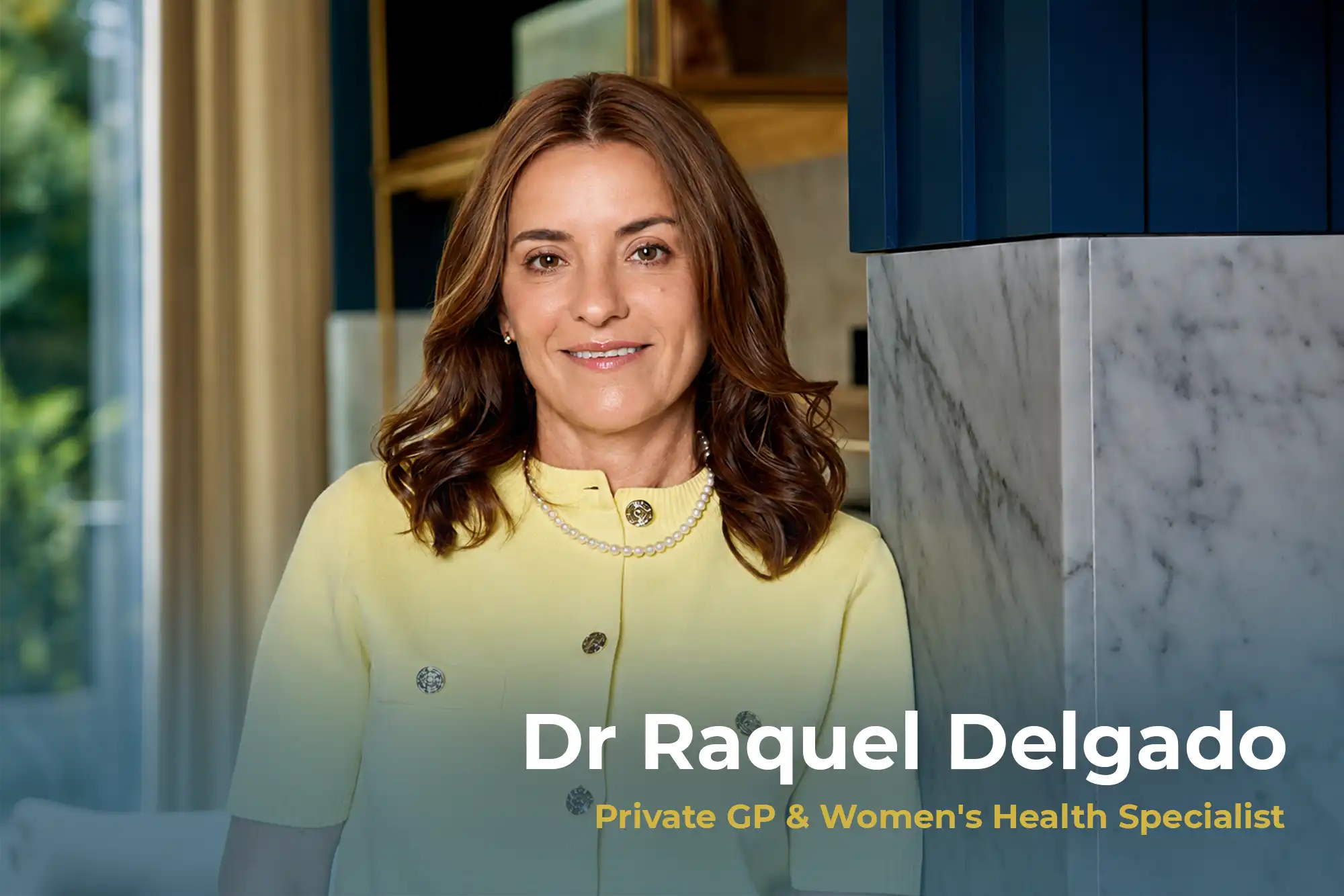
Dr Raquel Delgado is a private GP in London with more than 20 years of clinical experience in general practice, women’s health, and hormonal care. Focus areas include doctor-led, natural-looking aesthetic treatments for women, with consultations in both English and Spanish. Every consultation is with Dr Delgado personally, giving you the same clinician’s judgement and continuity of care each time.
If your cycles have changed and you are unsure whether it is perimenopause or something else, a proper review gives you answers instead of guesses. We can look at your dates, your symptoms and your risk factors, arrange the right tests and talk through your options at your pace. You can read more about our GP services, visit our homepage or browse our Wellness Library for further reading. To arrange a consultation, contact us directly or reach out using the details below:
A few signs call for prompt attention rather than waiting:
If any of these apply to you, that needs proper assessment with us rather than waiting for it to settle.
Often, yes. A cycle of 28 days or shorter will put two start dates in at least one calendar month each year, and gaps of 21 to 35 days are the usual range.
Yes. A change in how often periods come is usually one of the first signs of perimenopause, and cycles often shorten in the late 40s before they lengthen.
A gap of under 21 days is classed as irregular. If this happens on more than one cycle, we recommend a review.
It can contribute. Stress and anxiety are recognised causes of irregular periods, but a repeating pattern deserves checking for other causes.
See a doctor if gaps stay under 21 days, bleeding is heavy or lasts more than 7 days, you bleed between periods or after sex, or any bleeding follows menopause.
Occasionally, early pregnancy bleeding can look like a period. If you have missed a period, have bleeding and have tummy pain, seek urgent medical help the same day and contact us.
This article is for general information and does not replace a personal consultation. If you have concerns about your periods, heavy bleeding or any unusual bleeding, please get in touch with us promptly.
Webdesign by EyeMedia Creative