


Last Updated: November 4th, 2026
Reading Time: 11 mins
Premature menopause signs usually start with periods that become irregular or stop before the age of 40, often alongside hot flushes, night sweats and changes in mood or sleep. These changes are easy to put down to stress or a busy life, so they are often missed for months or years. A hormone check is a simple way to find out what is happening, and it matters because low oestrogen at a young age affects the bones, heart and mind over time. This guide explains the signs, causes, tests and treatment, and when to book.
Key points
Premature menopause signs are the changes you or the people around you can notice. The first and most reliable one is a change in your periods. Cycles may become longer, shorter, lighter or unpredictable, and then gaps appear. Missing periods for several months, when you are not pregnant, is a sign that deserves a proper check rather than a wait-and-see approach.
Other signs often follow. You may wake drenched in sweat, feel waves of heat in the face and chest, sleep badly, or find that your skin and eyes feel drier than usual. Friends may say you seem more tired or less like yourself.
Many women in their thirties assume menopause is something for their fifties, so they do not connect the dots. If you are under 40 and recognise two or more of these signs, our guide on signs of perimenopause explains how the same changes show up at different ages. Dr Raquel Delgado sees how often these signs are dismissed, which is why we suggest checking early. If several of these sound familiar, a hormone check can give you a clear answer.
Premature menopause symptoms are what you feel day to day, and they stretch well beyond hot flushes. Signs are what others might spot, while symptoms are your own experience of falling oestrogen. The common ones include:
Symptoms often feel stronger when menopause arrives early, because the body has less time to adjust. Brain fog can look like stress or burnout. Our post on perimenopause brain fog explains why it happens and what helps, and our guide to the real symptoms goes further into the wider picture.
Some women have few symptoms and only discover the problem when a period pattern changes or when they struggle to conceive. Mild symptoms do not make the effects on bones and heart smaller, so we do not rely on symptoms alone.
Premature menopause or early menopause depends on your age when periods stop. Early menopause is when regular periods stop before 45. Premature menopause is when this happens before 40. Both can occur naturally or after treatment for another condition, and both carry a higher chance of bone and heart problems than menopause at the usual age. The list of symptoms is the same for early menopause, which simply appears between 40 and 45. The NHS page on early or premature menopause gives the same definitions.
When the cause is the ovaries stopping normal function before 40, doctors usually call it premature ovarian insufficiency, or POI. The phrase “insufficiency” matters, because the ovaries can sometimes show occasional activity rather than shutting down completely. This is part of why the picture is not as final as the word “menopause” suggests, and why a careful diagnosis is better than a quick label. The earlier the menopause, the longer the time without oestrogen, and the stronger the case for replacing hormones and checking bone health.

Premature menopause age is, by definition, under 40. It is uncommon, but it can happen at any point after periods begin. Changes can begin in the thirties, and less often earlier.
Searching for premature menopause at 30 or 35 often reflects a real change that is being missed. If your periods have become erratic in your thirties, that is a reason to ask for a hormone check, not a reason to wait until you are older.
What age can premature menopause start? There is no lower limit after puberty, but the likelihood rises with age through the thirties. If periods have not started by the usual age, or stop in your early twenties, that deserves specialist assessment because the causes can differ. For most women reading this, the realistic window is the mid to late thirties, where irregular periods and hot flushes are often blamed on stress, thyroid problems or the contraceptive pill.
Premature menopause causes fall into a few groups, and in many women no clear cause is found. Knowing the group helps decide which tests are useful and how to plan fertility.
What causes premature menopause? The reasons include:
How does premature menopause happen in the body? The ovaries release eggs less often, then stop releasing them regularly, and they make less oestrogen. Those falling hormone levels cause the symptoms and the longer-term effects on bones and the heart. These premature menopause reasons can overlap, so we look at the full history.
Can PCOS cause premature menopause? No. Polycystic ovary syndrome, now also called PMOS, is a hormone condition linked to irregular periods, excess hair growth, acne and difficulty conceiving. The evidence suggests that menopause in women with PCOS may come at a similar age or slightly later, not earlier, although studies do not fully agree.
The confusion comes from the irregular periods. A woman with PCOS can go months between periods and wonder whether she has gone through menopause early. Blood tests, history and sometimes a scan separate the two, and our post on anovulatory cycles explains why periods can stop for reasons other than menopause.
Premature menopause risks come from living for years with low oestrogen, which protects several systems. Premature menopause effects build slowly, so you may feel well while changes are already happening. The main concerns are:
None of this is inevitable. Replacing the missing hormones is the main way to lower these risks, along with regular exercise, enough calcium and vitamin D, not smoking and keeping alcohol low.
A hormone check for premature menopause starts with listening. We ask about your periods, any changes over the last year, symptoms, family history, medicines, past treatments and whether pregnancy is possible. A physical examination and, where relevant, a pregnancy test come before blood tests, because pregnancy is the commonest reason periods stop.
The blood tests look at the hormones that control the ovaries. The pattern we look for is missed or infrequent periods for around four months or more, together with raised follicle-stimulating hormone (FSH) on two separate tests taken four to six weeks apart. One result alone is not enough, because levels can fluctuate. We also check thyroid function and other blood markers that can cause similar symptoms, and our guide to thyroid problems in women explains why that matters.
This table shows when a check is sensible.
| You can usually wait and watch | Book a hormone check |
| One late or missed period, with a clear cause such as stress or travel | Periods missing for several months, and a pregnancy test is negative |
| Cycles that vary slightly but stay regular overall | Irregular periods plus hot flushes or night sweats before 40 |
| Mild tiredness that improves with rest | Low mood, brain fog or poor sleep that is not improving |
| No symptoms and no family history | A mother or sister who had an early menopause |
| Periods settling after stopping a contraceptive | Cancer treatment, ovary surgery or a long gap since the last period |
Our private GP services include appointments where we can arrange these tests, and our Wellness Library has free resources to help you track your cycle before you come. A short diary of period dates and symptoms helps.
Premature menopause treatment is mainly about replacing the hormones your ovaries are no longer making. This usually means hormone replacement therapy (HRT) or, for some women, a combined contraceptive pill. Both can ease symptoms, and HRT may protect bone health better, so the choice depends on your health, your preferences and whether you need contraception.
HRT in this setting is not the same conversation as HRT started in your fifties. Because you are replacing what would normally still be there, the usual advice is to continue until around the age natural menopause would occur, unless there is a reason not to. The breast cancer worries people often hear about relate mainly to HRT taken later in life, and the evidence in women under 50 with premature menopause does not show the same pattern. If you have had a hormone-sensitive cancer, the decision needs a specialist discussion.
Treatment is tailored. Hormones can be taken as tablets, patches or gels, and a patch or gel can suit women who have a higher chance of blood clots. If you still have a womb, a progestogen is added to protect the lining. Vaginal oestrogen can help dryness on its own or alongside systemic treatment. Our posts on HRT side effects and the HRT review explain what to expect and why yearly reviews matter. Our women’s health care covers every stage of this.
Can premature menopause be reversed? Usually not. Premature ovarian insufficiency is not normally something that can be switched back on, and no treatment is proven to restore normal ovarian function. However, some women have intermittent ovarian activity, with the odd period or even a spontaneous pregnancy, so the picture is less final than the word “menopause” suggests. We would not promise recovery, but we would not rule out occasional activity either.
How long does premature menopause last? Menopause is permanent, so the question is about symptoms and treatment. Symptoms vary in length and can change over time, and they respond well to treatment. Hormone replacement is usually advised until around the age natural menopause would have happened, with a yearly review to check it still suits you.
Premature menopause makes pregnancy harder, because the ovaries release eggs less reliably. Some women still have occasional ovulation, so a small chance of natural pregnancy remains, and contraception is still a topic to discuss if you are not hoping to conceive. If you do want a family, we can discuss your options and arrange referral to a fertility specialist. Treatments using donor or frozen eggs are the main route when natural conception is unlikely. This is a sensitive area, and you can take your time.
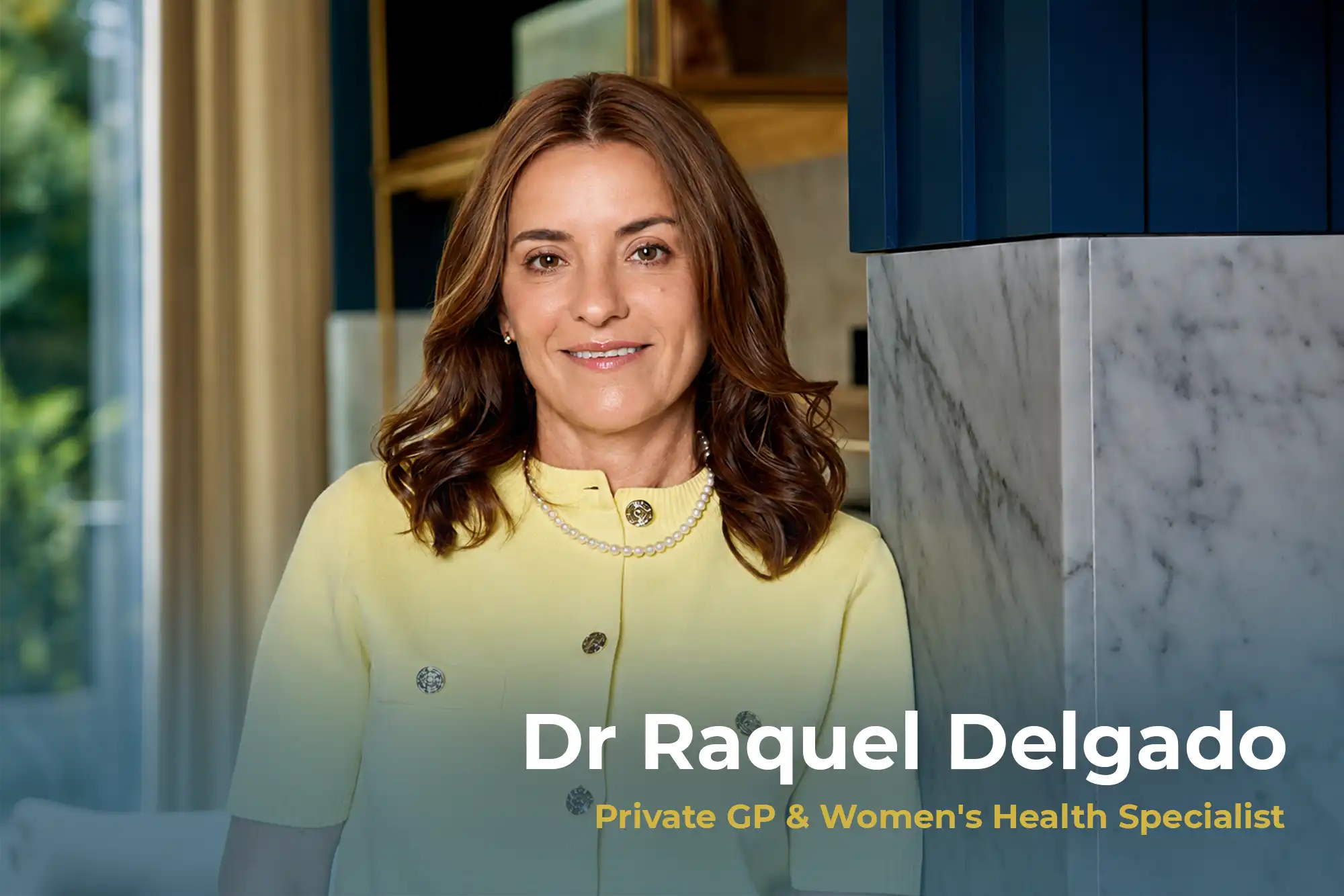
Dr Raquel Delgado is a private GP in London with more than 20 years of clinical experience in general practice, women’s health, and hormonal care. Focus areas include doctor-led, natural-looking aesthetic treatments for women, with consultations in both English and Spanish. Every consultation is with Dr Delgado personally, giving you the same clinician’s judgement and continuity of care each time.
If you recognise premature menopause signs in yourself, please contact us and we will arrange a hormone check.
WhatsApp: +44 7879 710046
Opening Hours: Monday to Friday, 9.30am to 8pm,
Saturday: Online AM appointments only
Contact us straight away so we can arrange to see you quickly if you have:
Changes in your periods are usually first, such as longer gaps, lighter bleeding or missed periods. Hot flushes, night sweats, poor sleep and low mood often follow. If you are under 40 and notice these, a hormone check is sensible.
It is uncommon, but it can happen. Menopause before 40 is called premature menopause, and some women notice changes in their early thirties. Irregular periods at that age have other possible causes as well, so tests are needed to tell them apart.
It is harder, but not always impossible. Some women have occasional ovarian activity, so a small chance of natural pregnancy can remain. If you want a family, fertility advice early on gives you the most options.
Diagnosis combines your period pattern, symptoms and repeat blood tests taken some weeks apart. We also rule out pregnancy, thyroid problems and other causes first. One result on its own is not enough.
Most women are advised to replace the missing hormones until around the usual age of natural menopause, because this protects bones and the heart as well as easing symptoms. The type and dose are chosen individually, and some health histories need a specialist discussion.
It can run in families. A mother or sister with an early menopause raises your chance, though many women with premature menopause have no family history. If it runs in your family, mention it at your first appointment.
This article is for general information only and does not replace a personal medical consultation.