


Last Updated: November 21st, 2026
Reading Time: 10 mins
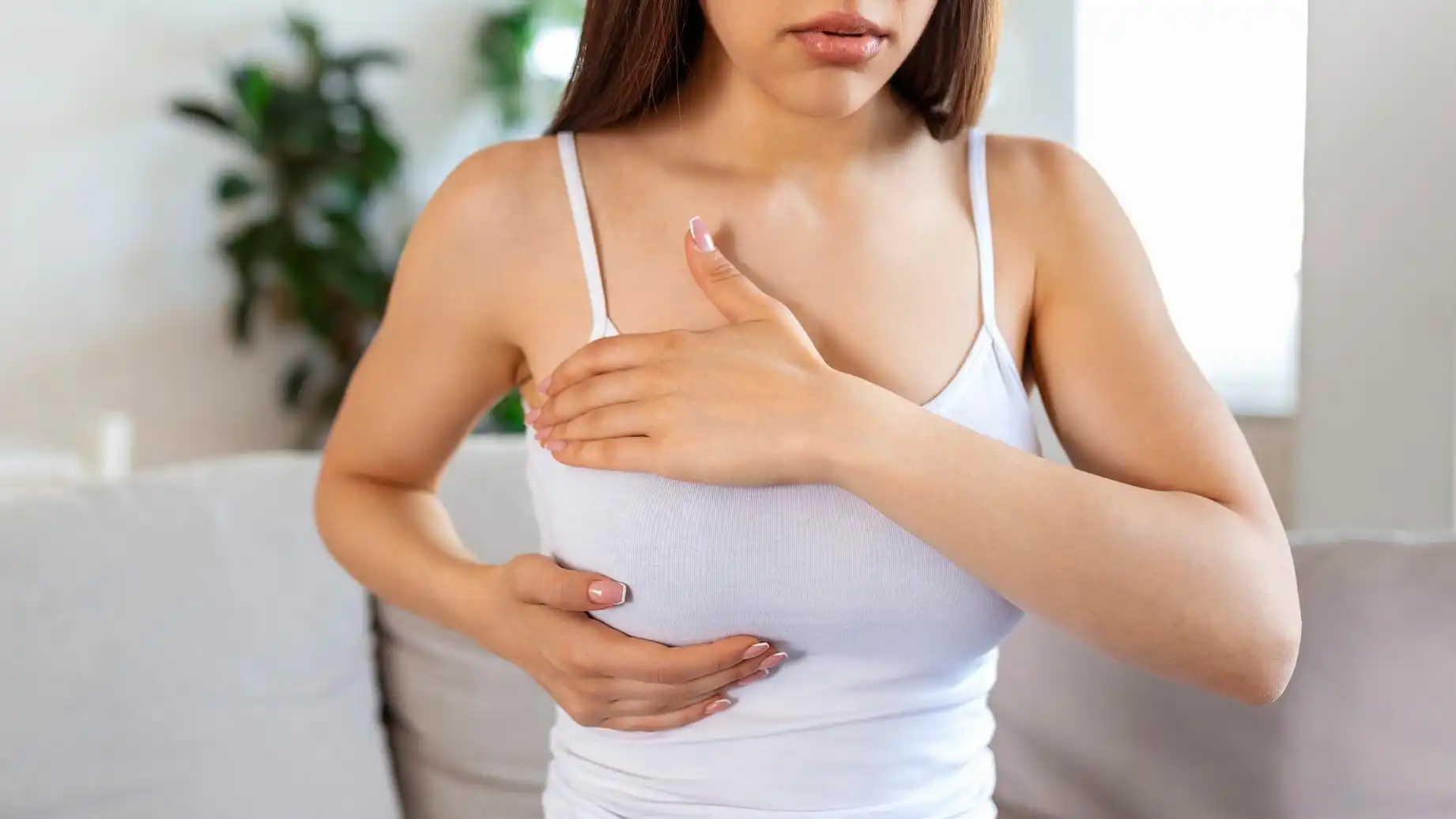
Breast pain on HRT is common, usually settles within a few weeks, and can often be fixed with a small change to your treatment. It can also tempt women to give up on HRT early, which is a pity when the answer is often an adjustment and not the end of treatment that is helping your hot flushes, sleep and mood.
This guide explains why breast tenderness happens on HRT, how long it usually lasts, what you can do at home and what a review can change. It also sets out the signs that mean we should examine your breasts and not wait. At our private GP services practice in London, we see this often, and your type of HRT, the timing and the pattern of the pain usually tell us where to start.
For many women, yes. Breast pain or tenderness is a recognised effect of both oestrogen and progestogen, the two hormones used in most HRT. In a large US trial of combined HRT, about a third of women reported new breast tenderness in the first year, compared with about one in eight women taking a dummy tablet. So hrt breast pain is not unusual, and it is not a sign that you picked the wrong treatment or that HRT is failing you.
Most of the time it is a settling-in effect. Breast tissue is sensitive to hormones, so when levels change it can swell and ache, a bit like the tenderness many women remember before a period. For most women it eases within a few weeks as the body adjusts.
Two points stop this from being a simple yes. First, pain on HRT is not always caused by HRT. Menopause itself can cause breast tenderness, and so can a badly fitting bra, a neck or shoulder strain, or another medicine. Second, normal does not mean ignore. Pain that is new, different, fixed in one spot, or paired with a lump or skin change needs an examination, and we cover those signs below.
Breast tenderness on HRT usually has a clear explanation once we know which hormones you take and how you take them. If you want the wider picture of breast soreness across the menopause, our post on sore breasts and menopause covers it. This guide focuses on women who are already taking HRT.
Yes. Can HRT cause breast pain is a fair question, because HRT is meant to ease symptoms and not create new ones. But both hormones in HRT can do it. Oestrogen stimulates breast tissue, which can make it fuller and more tender. A progestogen, which protects the womb lining in women who still have a uterus, may add fluid retention and more tenderness in some women.
The picture is not one-way. Tenderness can also come from your own hormone swings and not from the treatment, because the effects of HRT and the symptoms of menopause overlap. That is why we ask about breast symptoms before you start, and what has changed since.

Why do my breasts hurt on HRT depends on which hormone you take, how much, how it is taken, and whether HRT is the cause at all. This table shows the most common explanations and what usually helps.
| Possible cause | What it often looks like | What usually helps |
| Oestrogen | Both breasts fuller and tender, often in the first weeks | Time, then a review of dose or route if it lasts |
| Progestogen | Tenderness that may follow the pattern of the progestogen, sometimes with bloating or fluid | A review of the type, dose or how it is taken |
| A recent dose or route change | Tenderness soon after an increase or a switch | A few weeks to settle, then a review |
| Menopause itself | Tenderness that comes and goes as hormones swing | Checking that treatment is covering your symptoms |
| Bra, neck or shoulder | A dull ache that is worse with activity | A refitted bra and a check of the neck and shoulder |
| Another medicine | New tenderness after starting something else | A review of your full medicine list |
Many women who struggle with a progestogen are told HRT is not for them. Our post on progesterone intolerance explains why that is rarely the end of the road.
Sore breasts on HRT follow a more predictable pattern than it feels like when you are in the middle of it. Most women notice the soreness early, then see it fade over weeks. Some find it returns briefly after a dose change.
For most women it lasts a few weeks, and sometimes up to about 3 months. UK guidance says side effects often go away after a few weeks, and suggests carrying on for at least 3 months where possible before judging a treatment. Most women notice a clear improvement long before that point. Nobody can give you an exact timeline, because the answer depends on the hormone, the dose and your own sensitivity.
The trend matters more than the label. Pain that eases week by week is usually just settling. Pain that is unchanged or worse at 3 months, or pain that is severe at any point, is a reason for a review. Our guide to HRT side effects sets out how long other early effects usually last.
Breast tenderness after starting HRT is most common in the first two weeks, when the body is adjusting to a new level of hormone. Breast pain after starting HRT can feel like a heavy, dull ache in both breasts, or a sore, sensitive feeling when something brushes against them. Breast soreness on HRT can also come back after a dose increase, and then settle again.
A few habits help in these early weeks:
That short diary is often enough to show us whether the pain follows a pattern, such as the progestogen part of a monthly cycle, or whether it is steady.
Patches release oestrogen through the skin. The hormone is the same oestrogen that tablets, gels and sprays deliver, so can HRT patches cause breast pain? Yes, they can, because the oestrogen reaches breast tissue whichever way it is taken. A progestogen taken alongside the patch can add to it.
What changes with the route is how the hormone is absorbed and how steady the levels are. That is why switching between tablet, patch, gel or spray is one of the options we discuss at a review. We cannot promise that one route will feel gentler for you, and it can take a try or two to find the best fit. A patch that keeps peeling off, or levels that dip before the next change day, can also bring symptoms back, so it is worth telling us if that happens.
While you wait for things to settle, simple measures help most women:
Popular supplements, including evening primrose oil and vitamin E, have little evidence behind them for breast pain, so we would not rely on them. If the soreness is stopping you from sleeping or exercising, that is enough reason to ask for a review without waiting for the full 3 months.
A review is where most breast pain on HRT gets solved. UK guidance advises a review about 3 months after you start or change HRT, and then yearly if all is well, with an earlier review if side effects are troublesome. At a review, Dr Raquel Delgado looks at which hormones you take, the dose, the route and your pattern of pain, and then decides what to change, if anything.
The levers we can adjust include:
Sometimes the best advice is to wait a little longer, and sometimes it is a small change. We also look at the whole picture, including flushes, sleep, mood and bleeding, because the right answer for your breasts should not undo what HRT is doing well. It helps to bring your diary and a list of your medicines. Our Consultation Toolkit has short guides on what to bring and which questions to ask, and our post on the yearly HRT review explains what that check involves. You can read more about our women’s health approach to menopause care.
Pain by itself is unlikely to be a symptom of cancer, as the NHS guidance on breast pain says. HRT does carry a small increase in breast cancer risk overall, which is one reason breast awareness matters while you take it. So the question is not only how sore your breasts are, but whether anything else has changed.
Get in touch with us if you notice:
A hot, swollen or discoloured breast with a fever needs same-day attention, so contact us straight away. Pain in one breast on HRT is not automatically serious, but it deserves a proper look, because one-sided pain that stays in the same place is one of the features we want to examine. An examination comes first, and any scan or further test follows from what we find. Please keep attending your routine breast screening invitations as well.

Dr Raquel Delgado is a private GP in London with more than 20 years of clinical experience in general practice, women’s health, and hormonal care. Focus areas include doctor-led, natural-looking aesthetic treatments for women, with consultations in both English and Spanish. Every consultation is with Dr Delgado personally, giving you the same clinician’s judgement and continuity of care each time.
If your breasts have been sore since starting HRT, the pain is not settling, or you are not sure whether what you feel fits the usual pattern, contact us and we will arrange to see you quickly. You can read about our approach on our home page, and our Wellness Library has free guides on healthy habits through the menopause.
WhatsApp: +34 623 048 834
Mail ID: admin@drraqueldelgado.com
Opening Hours: Monday to Friday, 9.30am to 8pm,
Saturday: Online AM appointments only
Contact us straight away so we can arrange to see you quickly if you have:
Pain on its own is unlikely to be a sign of cancer. What needs checking is anything alongside it, such as a lump, a nipple change, skin dimpling or new one-sided pain. We examine you first, and decide on any further tests from what we find.
For most women, yes. It usually eases within a few weeks, and sometimes takes up to about 3 months. If it is severe, or still there at 3 months, a review can adjust the dose, route or progestogen.
Yes, it is one of the most common early effects of both oestrogen and progestogen. Common does not mean you have to put up with it, and a change to your treatment often helps.
Not suddenly. Mild tenderness tends to settle, and stopping can bring your flushes and poor sleep back. Speak to us first, because a small change to the dose or route often solves the problem without losing the benefits.
Often it does. We can adjust the dose, switch between tablet, patch, gel or spray, or change the progestogen. We cannot promise which change will suit you, so we review your pattern and try the most likely one first.
Pain in one breast can come from hormones, a strain in the chest wall, neck or shoulder, or a benign breast change. One-sided pain that is new, fixed or paired with a lump or skin change needs an examination, so please contact us.
Wear a properly fitted bra by day and a soft one at night, use paracetamol, ibuprofen or a painkilling gel as directed, and keep a short diary. If it is not improving after a few weeks, ask for a review.
This article is for general information and does not replace a personal medical assessment. If you have symptoms, contact us for an individual consultation.