Last Updated: November 23rd, 2026
Reading Time: 11 mins
Hormone imbalance in women is not a single condition. It is a catch-all phrase for many different problems, and tiredness, mood changes and weight gain have plenty of non-hormonal causes too. When hormones are involved, the usual suspects are thyroid disease, polycystic ovary syndrome (PCOS, now also called PMOS) and perimenopause, the years leading up to menopause. Blood tests do not always settle the question, and some of them add nothing at all.
You may have been told your hormones are “out of balance” without a clear explanation, or you may suspect it yourself. We explain what to look for, what tends to cause it, which tests help and what happens next.
There is no diagnosis called “hormone imbalance”. We look for a specific problem instead, such as a thyroid gland making too little or too much hormone, or ovaries that are not releasing eggs regularly. The phrase works as shorthand for “something hormonal may be going on”, but it does not say what or why.
Hormones are also meant to move. Oestrogen and progesterone, the main female sex hormones, rise and fall every cycle and shift again around pregnancy and menopause. That is not a fault. It becomes a problem when symptoms disrupt your life or a proper assessment points to a specific condition.
Many symptoms blamed on hormones come from low iron, poor sleep, stress or medication. Sorting out which is which is the main job of an assessment.
The pattern changes with age. In the teens and twenties, irregular periods, acne and extra hair growth tend to point towards PCOS. In the thirties and forties, thyroid problems and the early changes of perimenopause become more common.
After 60, the picture needs careful wording. Once menopause has passed, low oestrogen is the normal state, not an imbalance, and it does not need correcting just because a number looks low. What does become more common with age is an underactive thyroid. Its symptoms (tiredness, low mood, weight gain, dry skin) are easily put down to getting older. If they are new, a thyroid blood test is a sensible first step.

The signs depend on which hormone or gland is involved, but a handful come up again and again:
None proves a hormone problem on its own, because each has several possible causes. Your age, your cycle history and the pattern of symptoms tell us far more than any single one. If you are comparing perimenopause with other explanations, our post on perimenopause signs is a useful companion.
Tiredness is the most common complaint and the hardest to pin down. An underactive thyroid, low iron, poor sleep and perimenopause can each cause it, and so can an overactive thyroid that keeps the body running too fast. Tiredness that does not lift after a good night’s sleep, or that comes with other changes, deserves a proper look.
Take a 42-year-old woman who sleeps eight hours but wakes exhausted. She snaps at her family over small things, her jeans feel tighter and her periods are harder to predict. That could be perimenopause, an underactive thyroid, low iron or a stressful year. The picture alone cannot tell us which.
So we ask about timing, your cycle, family thyroid history and what else is going on in your life.
Hormone imbalance mood swings are commonly described as feeling edgy, tearful or flat for no clear reason. An overactive thyroid tends to bring anxiety, irritability and poor sleep, while an underactive thyroid is linked with low mood. In perimenopause, UCL researchers found women had around a 40% higher risk of depression than before the transition, with no significant increase after menopause.
Depression and anxiety are conditions in their own right and respond to proper treatment. If low mood lasts more than a couple of weeks, or you feel hopeless, please speak with us promptly rather than waiting for a blood test.
Sometimes, but it is rarely the whole story. An underactive thyroid can bring weight gain, along with tiredness and feeling cold. PCOS is linked with insulin resistance, which means the body responds less well to insulin and finds weight easier to gain and harder to shift.
Menopause is the cause people ask about most. A large US study, SWAN, found that around the final period the rate of fat gain doubled and muscle mass fell, yet the overall rate of weight gain did not change. Most evidence suggests the number on the scales follows age, while menopause changes where fat is stored, typically towards the waist. Your clothes can fit differently even when your weight has barely moved.
If weight is your main concern, our menopause weight management service looks at the whole picture, and our post on menopause belly fat explains the waistline changes in more detail.
It can, but hormones are rarely the only suspect. Thyroid disease, PCOS and the months after childbirth can all thin the hair. So can low iron or vitamin D, crash dieting, a severe illness and long spells of stress. The most common type, female pattern hair loss, mostly affects women with normal hormone levels. Up to 40% of women have noticeable hair loss by 50.
That mix is why a blood test for thyroid function and iron is a sensible start when shedding increases. If your hair changes began around perimenopause, our post on menopause hair loss covers what tends to grow back and what does not.
A few conditions account for most cases, and their symptoms overlap. This table shows how they compare.
| Condition | Common symptoms | How it is checked |
| Underactive thyroid | Tiredness, weight gain, feeling cold, low mood, dry skin and hair | Blood tests for TSH (thyroid-stimulating hormone) and thyroxine (T4) |
| Overactive thyroid | Anxiety, irritability, poor sleep, palpitations, weight loss, heat sensitivity | The same thyroid blood tests |
| PCOS (PMOS) | Irregular periods, acne, extra hair growth, weight gain | Symptoms, hormone blood tests and sometimes a scan |
| Perimenopause | Changing periods, hot flushes, poor sleep, mood changes | Symptoms and age (over 45) |
Other causes include stopping hormonal contraception, pregnancy and breastfeeding, and, less often, conditions of the pituitary or adrenal glands.
Thyroid problems are among the most common hormonal causes we see. An underactive thyroid affects roughly 2 in 100 people in the UK and more than 5 in 100 over 60, and it is five to ten times more common in women. In the UK the main cause is Hashimoto’s disease, an autoimmune condition in which the immune system attacks the thyroid. It typically starts between 30 and 50. An overactive thyroid is about ten times more common in women and tends to appear between 20 and 40.
The symptoms can mimic menopause, which is how thyroid disease goes unnoticed for years. Feeling cold is one clue, since it is a recognised sign of an underactive thyroid but not a typical menopause symptom. Once found, treatment is straightforward: thyroid hormone replacement tablets for an underactive thyroid, typically for life. Our post on thyroid problems in women has more detail.
Polycystic ovary syndrome (PCOS) was renamed polyendocrine metabolic ovarian syndrome (PMOS) in May 2026, to reflect that it affects hormones and metabolism, not just the ovaries. Diagnosis and treatment have not changed, and the new name is being phased in over several years.
It affects somewhere between 1 in 10 and 1 in 8 women, and many have no symptoms at all. When it does cause problems, the usual ones are irregular periods, acne, extra hair growth and difficulty losing weight. It also raises the risk of type 2 diabetes and high cholesterol later in life, so it is worth diagnosing even when symptoms are mild. There is no cure, but symptoms can be treated and the long-term risks managed.
Perimenopause is the run-up to your last period, lasting a few years, when oestrogen and progesterone begin to fluctuate. Periods become irregular, and you may notice hot flushes, night sweats, poor sleep, low mood and brain fog. Because oestrogen and progesterone swing from week to week, symptoms can change quickly and feel unpredictable. Treatment is available if symptoms are hard to live with.
This is also where testing surprises people. Over the age of 45, perimenopause is diagnosed from your symptoms and cycle changes, not from a blood test. We cover that in the testing section below, and our women’s health page explains the support we offer.
Stress can disrupt your cycle. Under sustained pressure, the body signals the brain to turn down the hormones that drive ovulation, which can make periods late, light or absent. In its most severe form this is called functional hypothalamic amenorrhoea, a medical term for periods stopping because of those brain signals. Very heavy exercise or low energy intake can cause it too.
That said, stress does not normally cause a lasting “cortisol imbalance”. Terms such as adrenal fatigue are not recognised medical diagnoses, and a supplement is unlikely to undo what a stressful year, poor sleep or an undiagnosed thyroid problem has caused. If your periods changed after a hard stretch and have not settled, cycles where no egg is released, known as anovulatory cycles, are a common reason.
Blood tests are useful when they answer a specific question. They are the right tool for thyroid disease, where TSH and thyroxine levels show how the gland is working. They help in assessing PCOS, and a blood count and iron levels can explain tiredness and hair shedding.
They are much less helpful for perimenopause. NICE advises against using laboratory tests to diagnose perimenopause or menopause in healthy women over 45. That includes oestradiol, inhibin and anti-Müllerian hormone, all hormones linked to the ovaries. Their levels move around too much to give a reliable answer. Dr Raquel Delgado takes the same approach in practice: start with your history and cycle, then test only when the result could change what we do. Home kits that measure a single hormone add little. The full NICE guidance sets out the details, and our private GP service covers the first assessment.
No single hormone imbalance test checks everything, so the right one depends on the symptom pattern. Tiredness, weight gain and low mood tend to start with thyroid function, a blood count and iron levels. Irregular periods with acne or extra hair point towards PCOS-related hormone tests. If your periods change before 45, the picture is different. NICE allows FSH (follicle-stimulating hormone) testing for women aged 40 to 45 with symptoms and a changed cycle, and for women under 40 when menopause is suspected. Menopause before 40 is called premature ovarian insufficiency. Our post on premature menopause signs covers this in more detail.
Reading hormone imbalance in women test results also needs context. A level inside the lab’s reference range can still go with symptoms, and a result slightly outside it is not always disease. A borderline thyroid result, for instance, is normally repeated before anyone acts on it. That is why we read results alongside how you feel, not as a verdict on their own.
There is no single way to fix hormonal imbalance, because the fix follows the cause. An underactive thyroid is treated with thyroid hormone replacement tablets. PCOS has no cure, but lifestyle changes and medication can control symptoms and protect long-term health. Perimenopause symptoms can be treated with HRT (hormone replacement therapy) or other options, and we can talk through the benefits and risks for you. Where stress or poor sleep lies behind cycle changes, addressing those often helps most.
Treat promises of quick “hormone balancing” with caution, whether through supplements, detox plans or home test kits. Claims like these are rarely backed by good evidence, and they can delay finding a treatable cause. You can also browse our Wellness Library for free health guides.
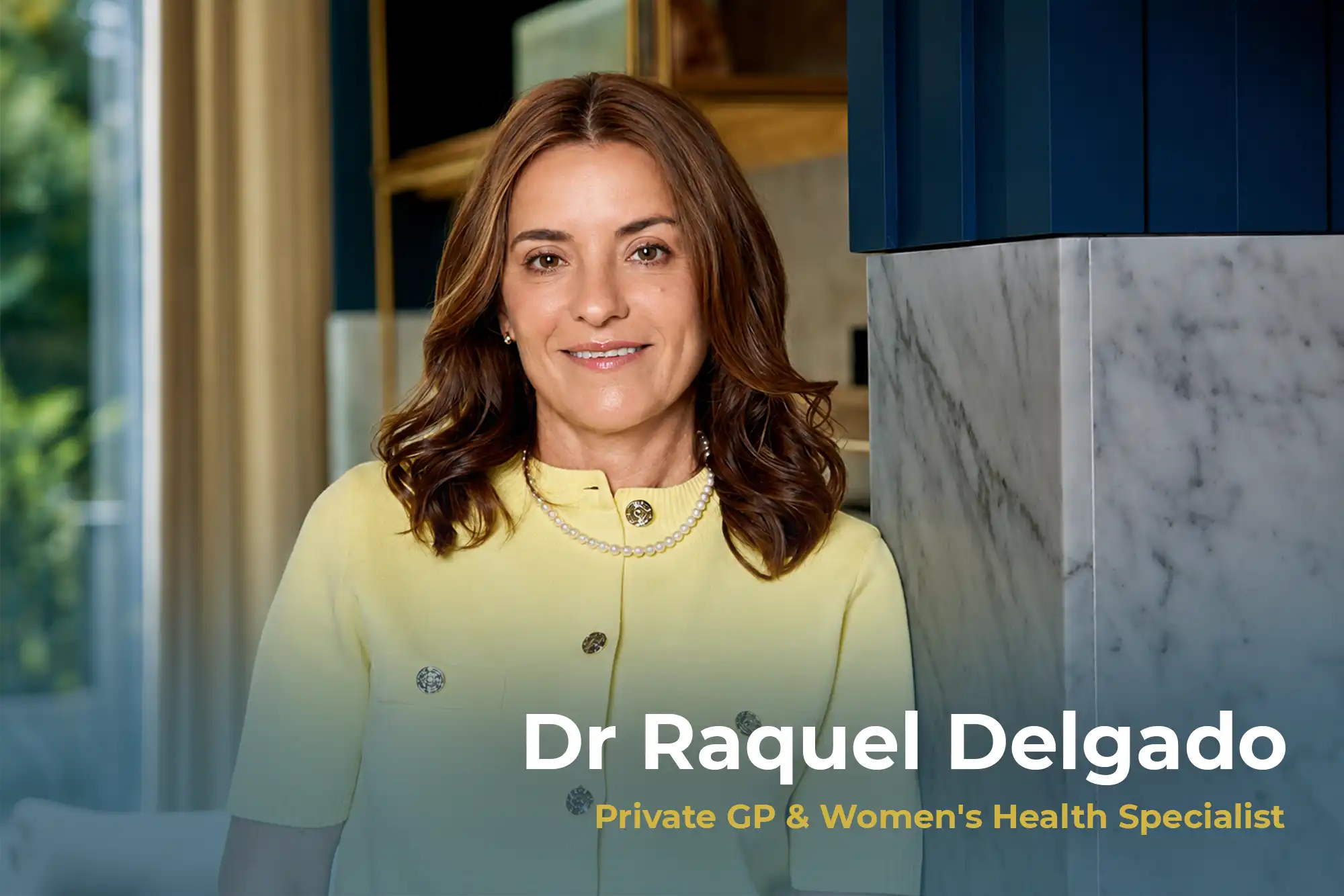
Dr Raquel Delgado is a private GP in London with more than 20 years of clinical experience in general practice, women’s health and hormonal care. She has a particular focus on doctor-led, natural-looking aesthetic treatments for women, and consults in both English and Spanish. Every consultation is with Dr Delgado personally, giving you the same clinician’s judgement and continuity of care each time.
If tiredness, mood changes, weight gain or irregular periods are worrying you, we start by listening to your history, then arrange only the tests that will help. Our home page explains how we work. To arrange a consultation, contact us or reach out using the details below.
The most common signs are irregular periods, tiredness, mood changes, weight changes, thinning hair, acne and poor sleep. None confirms a hormone problem alone, so we look at the pattern, your age and your cycle history together.
Female hormone levels are checked with a blood test, but only when the result will help. Thyroid hormones are tested routinely, and PCOS assessment uses hormone tests. Over 45, perimenopause is diagnosed from symptoms rather than hormone levels.
The right first step is a consultation with us. We assess your symptoms and history, arrange the tests that help, and refer on to an endocrinologist or gynaecologist when a condition needs specialist care.
Yes, in some cases. An overactive thyroid commonly causes anxiety and irritability, and perimenopause is linked with a higher risk of anxiety and low mood. Anxiety also has many non-hormonal causes, so it needs its own assessment.
Hormone changes are normal across the month and across life, including puberty, pregnancy and perimenopause. A true hormonal condition, such as thyroid disease or PCOS, is different, and it is treatable once identified.
It depends on the cause. Thyroid disease is controlled with long-term treatment, PCOS has no cure but can be managed well, and perimenopause settles in time and can be eased with treatment.