

Last Updated: August 12th, 2026
Reading Time: 6 mins
You wake up drenched, throw the duvet off, cool down, and just as you drift off again, it happens once more. If this is a familiar pattern, hot sweats in menopause are very likely the reason, and there’s a specific biological explanation for why they hit hardest overnight rather than during the day. It isn’t bad luck, and it isn’t something you simply have to live with. Once you understand what’s actually happening, there’s a lot that can be done about it.
What is hot flashes in menopause, in plain terms, is a sudden sensation of intense heat, usually starting in the chest, neck and face, often followed by flushing, sweating and sometimes a rapid heartbeat. Episodes typically last between one and five minutes, though it can feel much longer in the moment. Hot flashes peri menopause often start years before periods actually stop, as oestrogen levels begin fluctuating rather than declining smoothly, and for many women they continue well into the years after their final period.
This is the part that actually explains the sleep disruption, and it’s more specific than most explanations give credit for. Your core body temperature naturally drops in the evening to help you fall asleep. During menopause, the thermoneutral zone, the narrow temperature range in which your body neither shivers nor sweats, narrows sharply. That means the completely normal nightly temperature drop your body goes through is often enough on its own to trigger a hot flush. Your hypothalamus, the brain’s temperature control centre, effectively misreads a routine cooling signal as overheating and triggers a sweat response to compensate.
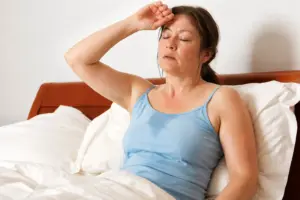
Night sweats in menopausal women tend to cluster in the second half of the night, which is exactly when deep and REM sleep are most important, so the disruption lands at the worst possible point in your sleep cycle. That’s why menopause hot sweats at night so often leave you exhausted the next day even if you technically got a full night in bed.
Hot flashes in menopause cause comes down to falling and fluctuating oestrogen affecting the neurotransmitters, particularly norepinephrine and serotonin, that regulate your hypothalamus. As oestrogen drops, norepinephrine activity can spike, which narrows that thermoneutral zone further and makes your temperature control system more reactive to small changes. Hot flashes after menopause causes are largely the same mechanism continuing, since oestrogen stays low permanently once periods have stopped, rather than a completely separate process.
Triggers that can make individual episodes worse include caffeine, alcohol, spicy food, stress, warm rooms and tight clothing, though the underlying hormonal shift is what makes you susceptible to begin with.
This varies enormously between women. Some notice occasional flushes, a few times a week, while others experience several an hour during the most intense phase of the transition. There’s no “normal” frequency, and how often you get them doesn’t necessarily predict how much they’ll affect your quality of life, some women with fewer episodes find them more disruptive simply because of when they strike.
On average, vasomotor symptoms last somewhere between four and ten years, and for a meaningful number of women they continue for longer than that. Hot flashes in menopause how long they persist depends partly on when they started, women whose symptoms began earlier in perimenopause tend to have a longer overall course than those whose symptoms start closer to their final period.
Hot sweats after menopause are common and don’t automatically mean anything has changed or gone wrong. Because oestrogen remains low after your final period, the same thermoregulatory sensitivity persists, which is why symptoms can continue for years after periods have stopped entirely.
For a smaller number of women, hot sweats in elderly age can persist for decades after menopause. This is worth separating from new sweating episodes that develop later in life without any menopause connection, which can have other causes entirely, including thyroid conditions, infections, certain medications, or other underlying health issues. If sweating starts fresh well beyond the menopause transition rather than continuing an existing pattern, it’s worth getting checked rather than assuming it’s hormonal.
There are more options now than there have ever been, including a genuinely new one. Treatment approaches generally fall into these categories:
What helps hot flushes in menopause also depends heavily on individual health history, so what works well for one woman may not suit another, particularly around HRT eligibility.
Alongside medical treatment, practical changes make a real difference for many women:
None of these replace medical treatment for moderate to severe symptoms, but they reduce the frequency and intensity of individual episodes and are worth combining with whatever treatment path you choose.

You don’t need to wait until hot sweats are unbearable before getting help, and you shouldn’t have to simply endure years of broken sleep either. If this is affecting your sleep, your work or your wellbeing, it’s worth a proper conversation.
We offer both HRT and non-hormonal options including fezolinetant where appropriate, with time to talk through your history and what’s likely to suit you specifically. You can Book An Appointment directly, read more on our Women’s Health page, or check current pricing on our Fees page before booking.
Dr Raquel Delgado has over 20 years of clinical experience as a GP, with a particular focus on perimenopause, menopause and women’s hormonal health, consulting in both English and Spanish.
This guide is general information and isn’t a substitute for a one-to-one consultation. If your symptoms are severe, worsening, or you’re unsure what’s causing them, the right next step is a proper assessment.
WhatsApp: +44 7879710046
Email: dr@drraqueldelgado.com
Contact Us
Opening Hours: Mon – Fri, 9.30am – 8pm
Saturday: Online AM appointments only
They’re the same underlying process, a hot flush that happens while you’re asleep is called a night sweat. The mechanism is identical, only the timing differs.
For most women, yes, largely. HRT is the most effective treatment available and substantially reduces both frequency and severity for the majority of women who use it.
Because your core body temperature naturally drops to help you sleep, and the narrowed thermoneutral zone of menopause means that normal drop is often enough to trigger an episode, particularly in the second half of the night.
They’re one of the most common early signs, though not the only one. Many women notice them alongside changing periods before menopause is formally confirmed.
Eventually, for most women, yes, though the timeline varies widely and can extend well beyond menopause itself for some.
There’s a genuine research link worth knowing about. Pooled studies have found that severe or frequent vasomotor symptoms are associated with higher rates of cardiovascular events later on, though this reflects an association rather than proof that hot sweats directly cause heart problems. It’s one more reason severe or persistent symptoms are worth having properly assessed rather than simply managed alone.
If any of this sounds familiar and you’d like to talk it through properly, Contact Us and we’ll help you find an appointment that works, whether that’s an online consultation or an in-person visit in London.
Webdesign by EyeMedia Creative